



Caravans of the train Silk Road: Turkmenistan
About tour
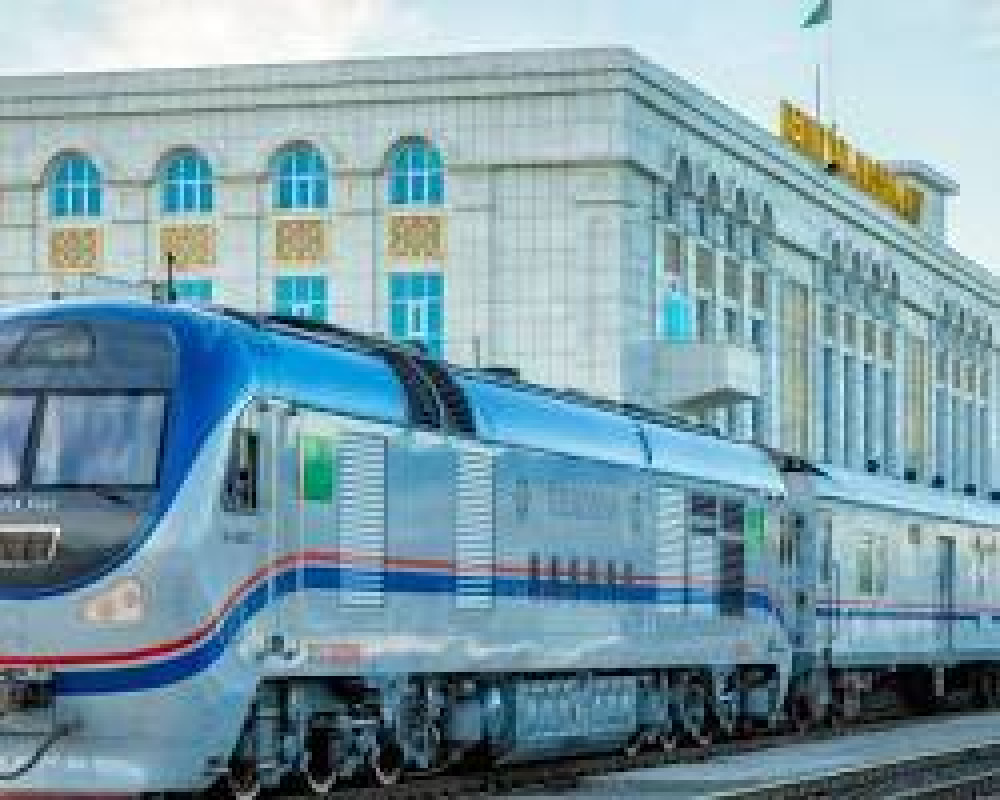
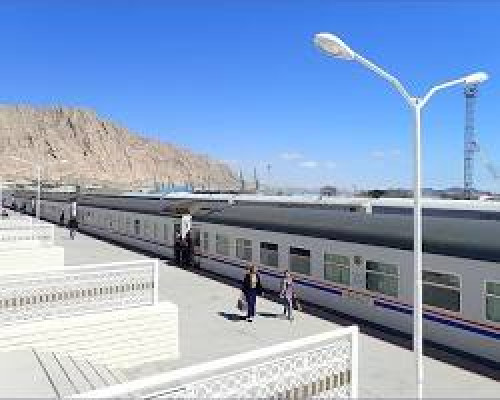
A 14-days, 13-nights itinerary white Marble Architecture, Ancient Silk Road History, Desert Wonders, and Turkmen Culture. A combination of nights spent onboard the train (in private cabins/sleepers) and nights in hotels in key destination cities. Moderate to Fast, covering the country from the Caspian Sea to the Eastern deserts.
Itinerary
-
Arrival to Ashgabat international airport in the early morning at by Turkish Airlines.
Tour guide will meet you with “Ak yol travel” signboard at meeting area and transfer to the hotel.
Upon arrival check in and overnight at the hotel. Rest time.
Ashgabat is a relatively young city in 25.05.2013 city was included Gunnies Book of records as a white marbled city on the world.
10:00 – Ashgabat sightseeing:
Independence Park if you once find yourself in Ashgabat, the city of love, white marble and thousands of fountains, you must visit the main park in the Turkmen capital - National Independence Park. This Park is one of the city’s attractions, embodying the spirit of modern Turkmenistan.
Arch of Neutrality used to stand on the main square of the country, but in 2011, was moved to Ashgabat’s outskirts. Still worth a visit, this multi-level structure is crowned by a sculpture of the former Turkmenistan´s President, Saparmurat Niyazov. Previously, the sculpture used to rotate after the sun, making a daily full turnover.
The Hotel “Bagt Koshgi” that from Turkmen language means “The temple of Happiness” is a part of a Wedding Palace with the same name located in 5 km from the centre of Ashgabat. This unique building of an unusual shape was opened in 2011 and besides the hotel includes six luxurious halls for marriage registrations, seven banquet halls, numerous shops and other different facilities necessary for wedding arrangement such as beauty salons, wedding dress boutiques, photo booths, and many others. “Bagt Koshgi “complex is an 11-storey building consisting of solid foundation on which a cube with octagonal sides stands, and this unusual figure can hold inside a huge ball with a diameter of 32 meters.
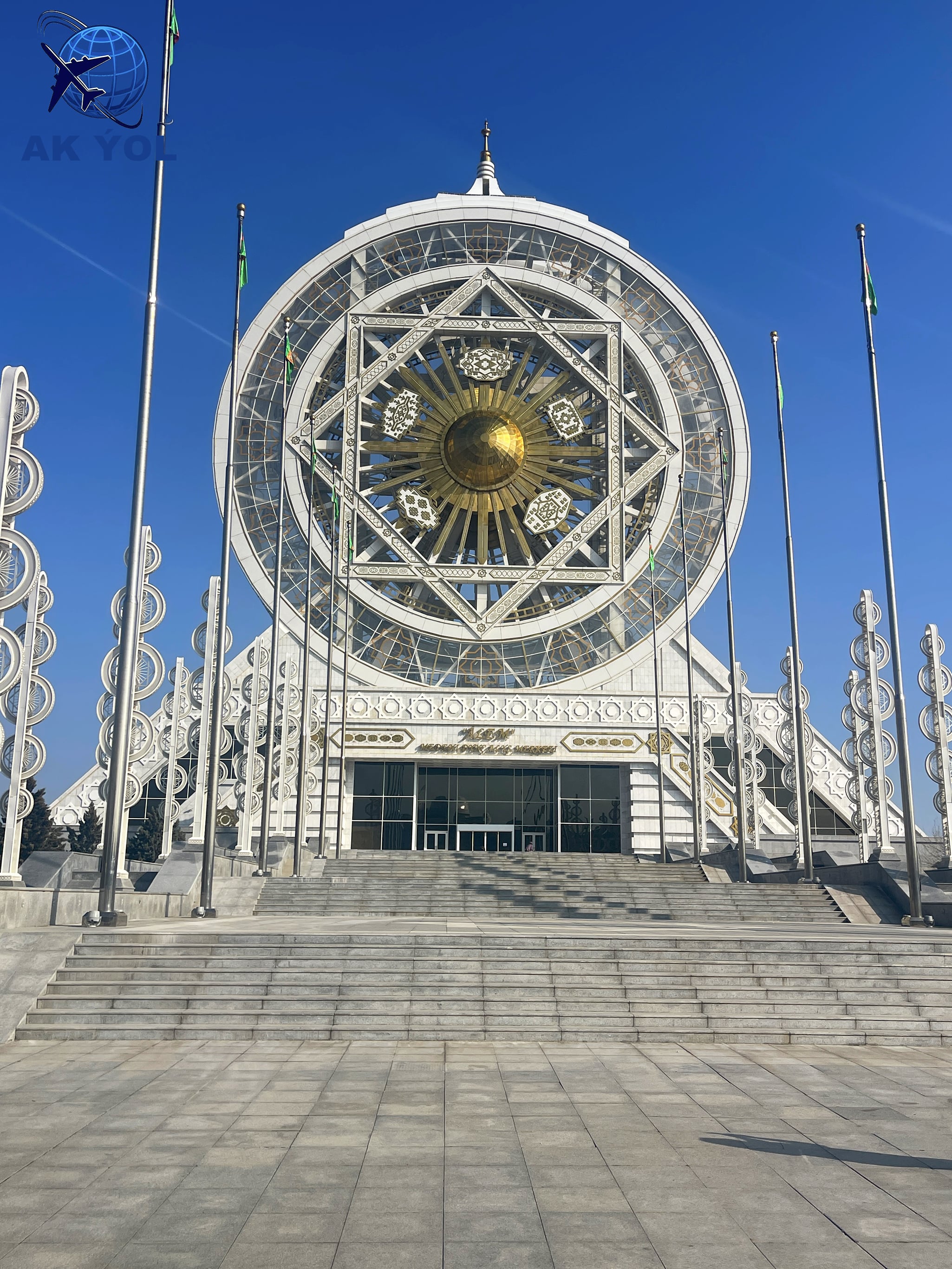
The Ferris Wheel in Ashgabat, known as the Giant Wheel, is an iconic landmark that complements the city’s modern skyline. From a height of about 40 metres, it offers a stunning panoramic view of Ashgabat and the surrounding landscape. Located in the heart of the city centre, the Ferris wheel is part of the large ‘Independence Park’, which features beautifully landscaped gardens, fountains and various recreational facilities. The giant wheel is particularly enchanting at night when it is lit up with multi-coloured lights, creating a vibrant atmosphere. It is an ideal place for families, couples and anyone who wants to admire the breathtaking views of Ashgabat, especially at sunset. This attraction symbolizes the rapid development of Turkmenistan‘s capital city and its desire for modernity, and provides a fun and enjoyable experience for all ages.
The Constitution Monument, in Ashgabat, stands as a symbol of the nation’s commitment to democracy and the rule of law. Unveiled in 2011, the monument celebrates the significance of the Constitution of Turkmenistan, which was adopted in 1992.Design and Features of the monument features a grand architectural design, characterized by its towering structure that represents the ideals of freedom and governance. The central element of the monument is a large, open book symbolizing the Constitution itself, with the text inscribed on its pages. Surrounding the monument are beautifully landscaped gardens, enhancing the monument’s prominence and serving as a peaceful gathering place for citizens and visitors.
Ertugrul Gazi Mosque is one of the most beautiful Muslim mosques of Turkmenistan. Like any other buildings, erected in Ashgabat during the period of independence, the mosque strikes with its size and rich decoration.
The State Museum of the State Cultural Center of Turkmenistan is the first and largest one of the 26 museums established following the independence of Turkmenistan. The official opening took place on 12 November 1998. It is located on Archabil Avenue in the picturesque Kopet Dagh foothills. Opposite the museum there is the main flag of Turkmenistan attached to one of the highest flagpole in the world.
Night at the hotel.
-
BREAKFAST
09:00 -you will meet your guide and then begin your journey.
Nisa Fortress, located near Ashgabat in Turkmenistan, is a UNESCO World Heritage Site renowned for its historical significance and architectural grandeur. The site comprises the ruins of two ancient fortresses, Nisa and Old Nisa, which were pivotal in the region during the Parthian Empire (247 BC – 224 AD). Nisa was a prominent center for the Parthian dynasty, serving as a royal residence and a key military stronghold. The site is believed to have been established in the 3rd century BC and showcases a blend of Persian and Hellenistic architectural styles, reflecting the cultural exchanges of the time. It was also an important hub for trade along the Great Silk Road, linking East and West.
Turkmenbashi Ruhy Mosque (also known as the Gypjak Mosque) is one of the largest mosques in Central Asia, located in Gypjak, a village near Ashgabat, the capital of Turkmenistan. It was commissioned by Saparmurat Niyazov, the first president of Turkmenistan. The mosque covers an area of 18,000 square meters and can accommodate around 10,000 worshippers at a time. Its central dome reaches a height of 55 meters, while the minarets are 91 meters tall, representing the year 1991, when Turkmenistan gained independence from the Soviet Union. Design built primarily from white marble, which is commonly used in Ashgabat, the mosque reflects a blend of traditional Islamic and Turkmen styles. The interior is adorned with intricate patterns, including calligraphy from the Quran.
In the afternoon transfer to the Railway station to board the to Mary (Kupe/4-berth). Departure from Ashgabat to Mary at 15:30.
Today evening arrival Mary Railway station at 23:58.
Upon arrival Mary and transfer to hotel.
Night at the hotel
-
BREAKFAST
09:00 - drive to Ancient Merv historical site (30 km).
Ancient Merv was the most important Silk Road hub in the region, and particularly thriving as regional capital under Seljuk governor Sanjar. Merw is the collective name of five urban centers that existed under various different names in different periods from the VI c BC up to the XVIII c AD.Today, Merv occupies a territory of more than 1200 ha and forms the biggest archeological site in Central Asia. The importance of the site was recognized in 1999 by UNESCO, which awarded Merv World Heritage status.
The Seljuk capital, consisting of a shahristan (medieval citadel) and a rabat(outskirts of the medieval city), considerably exceeded Damascus and Jerusalem in size. Today the Seljuk citadel is called SultanKala. It has an oval shape and occupies about 630 hectares. Its layout is still visible in aerial pictures. Among all city sites of Merw, perhaps the most significant is the medieval Seljuk city.
Soltan Sanjar Mausoleum most majestic architectural monument of Merv is Sultan Sanjar mausoleum called "Dar-al-Akhir" ("Otherworld"). His whole appearance it represents the highest achievements and flourishing Seljuk power. Sultan Sanjar Mausoleum is located in the center of the settlement Sultan Kala. Nearby are large monumental buildings - the palaces of Seljuk rulers and a mosque.
Great and Less Kiz fortress small fortresses with corrugated, if folded in the crease, napodobye accordion, walls. They put on the earthen ramps with mild slope. Small windows are hidden in the folds of the walls. At the top of the wall terminate toothed battlements, which are almost did not survive.
Mausoleums of ashkhabs. Original set of graves from the time of the Arab invasioninto Central Asia in the early years after the death of Mohamed. The graves of two askhabs(companions/campaigners of the Prophet) are of Al KhakamGifari (died in 670) and Bureyda Al Aslami (died in 681).
Gyaur Kala fortress In Turkic languages, "Gyaur" means "infidel", referring to those who do not practise Islam. The name of the fortress in ancient Merv, Gyaur-Kala - "Fortress of the Infidels" - was given by the Arabs who conquered it in the early 8th century. However, the fortress itself dates back much earlier, to the 4th-3rd centuries BC.
Erk-Kala fortress was the center of ancient Merv. The fortifications of Erk-Kala have sagged under earth drifts but nevertheless, have preserved their height and power. This distinguishes Erk-Kala from other fortresses. Now the height of the fortifications with steep slopes and precisely cut out towers reaches 25 - 29 m.
Ice houses (approximately XV c., Timurid rule)are visible from the road between the medieval and ancient cities of Merv. An extraordinary conical clay construction, built directly on the ground to store tightly packed snow. The original height is hard to determine.
The mausoleum-complex of Hodja Yusuf Hamadani (Hamdani) includes a modern mosque and minaret, the grave and mausoleum of Hodja Yusuf Hamadani (died in 1140), a Timuridiwan(portal) and a prayer hall. It is located not far from the Seljuk citadel. This complex has been largely reconstructed and turned into an important pilgrimage site. Hodja Yusuf Hamadani was a famous Sufi scholar of the 12th century, and the first of a group of Central Asian Sufi teachers who founded the Naqshbandi order. He was born in 1048-49 in a small settlement called Bezendjird, close to the famous Iranian city of Hamadan, when Merw was under Seljuk rule.
Shahriar Ark was constructed - a citadel within the citadel, protected by its own walls and moat. Visiting Shahriar Ark you can see the Kepter Khana- an interesting corrugated structure, which is the best-preserved in the citadel. It’s walls still survive to a height of some 4,5 m, however the original height of the walls is hard to determine.
Mohamed ibn Zaid, dated by inscription to 1112-13. It is located outside the medieval Seljuk citadel. It is unclear as to whom the mausoleum is actually devoted to. The local legend speaks about Mohamed Said ibnZeidibn Ali ZeinalAbedonibn al- Huseinibn Ali-Talib, who was a prominent Shia teacher and direct descendant of the Prophet Ali in fifth generation.
Abdulla khan Kala, constructed in the time of Timurid rule in the region, and was enclosed by massive walls and a moat with massive ramparts. Although one of the strongest and best fortified cities in the area, Abdullakhan Kala never reached the importance of the previous city sites. The remains of the city walls are still impressive, however, the walls, the Timurid palace and other constructions in this citadel, as well as four gates were much better preserved in the 19th century.
After excursion drive to Mary city
Monument to the poet Mollanepes. The monument located in the center of Mary city. He lived in the 19th century.
Maru-Shahu-Jahan bazaar. Located in the center of Mary city, near the Murgab River. Maru-Sahu-Jahan bazaar is a local shopping center, offering a glimpse into everyday Turkmen life with lively shops selling produce, textiles, and household goods. Visits are usually to experience the local culture, atmosphere, and to purchase souvenirs of national handicrafts.
Mary Regional Library opened in 2011.The Mary Regional Library of Turkmenistan is the main cultural, educational, and research center on the Mary River. It serves as a large book depository with over three million copies, housing nine reading rooms, a museum of Turkmen books, and an observatory. This library serves 600 readers at a time. It is known for its unique tulip-shaped dome, which houses an observatory with a powerful telescope.
The History Museum in Mary houses an extensive collection of approximately 40,000 exhibits, showcasing the historical and cultural heritage of Turkmenistan. Covering an area of 10,000 square metres, the museum offers a comprehensive insight into the country's history through the ages. Founded in 1968 as the Mary Historical and Revolutionary Museum, the first exhibition opened in 1974. In 2010, the museum moved to a new building in the shape of an eight-pointed star, with a magnificent fountain at its centre. Statues of prominent Turkmen historical figures adorn the entrance. The exhibition area covers 4,000 square metres in six halls.
The Pokrovskaya Church in Mary, Turkmenistan is a historic, red-brick Orthodox church built in 1900. Located in the center of the city, it is a model of early 20th-century Russian colonial architecture with ornate, detailed brickwork.
Night at the hotel
-
BREAKFAST
08:30 - after breakfast drive to Gonurdepe by 4x4 vehicle. Gonurdepe located from Mary city 90 km.
Gonur Depe (2000 BC) is the largest settlement in historical Margiana, also known as Margush. Spend the afternoon walking among the remains of a sprawling city that contained a palace, temples with fire altars, living quarters, ovens and extensive burial grounds, including a royal tomb. Gonur Depe (Gray Hill), a huge city and temple complex in the Mary region of Turkmenistan, was discovered in 1972 by an archaeological expedition led by Viktor Ivanovich Sarianidi. The largest settlement in ancient Margiana, Gonur Depe belongs to the Bronze Age (3rd millennium BC) and appears to have been a major center of the Zoroastrian religion.Transfer to Mary train station, departure to Turkmenabat city at 21:17. Today midnight arrive at 02:21 Turkmenabat train station.
Transfer to the hotel.
Night at the hotel.
-
BREAKFAST
08:00 - drive to Dayahatyn caravanserai 170 km 2.5-3 h
The drive itself is part of the experience, traversing the route of the ancient Silk Road.
The Daya-Khatyn caravan sarai is located at an altitude of 232 meters above sea level, 1.3 kilometers from the left (western), main channel of the Amu Darya River, 2.1 kilometers to the east and slightly south of the Khalkabat railway station, 49.8 kilometers to the south and a little to the east of the village of Dargana, 148.3 kilometers northwest of the city of Turkmenabat in the Darganatyn etrap of the Lebap velayat.Dayahatyn (also spelled Dayakhatyn or Daya-khatyn or Bai Khatyn in folk) is a medieval caravanserai, sitting on the left bank of Amu Darya. The Daya-Khatyn Caravanserai was built in the second half of the XIth century.
Transfer to the Turkmenabat railway station
Departure to Ashgabat at 17:11.
Night at the onboard.
-
In the morning arrival Ashgabat railway station at 06:05.
Local restaurant breakfast.
Carpet Museum was established in 1993 to preserve and develop the traditions of Turkmen carpet weaving. More than two thousand carpets made by hand are awaiting to amaze their visitors. Both ancient and modern carpets are on display here, including one of 301 square meters that entered the Guinness Book of Records as the largest of the world.
Akhalteke Horse Farm the horse farm is located in the countryside area, behind the Geokdepe town, 55km. Excursion at the farm to see the AkhalTeke horse and Turkmen dog Alabay. Akhal-Teke horse farm – home to the world-famous Turkmen horses. Learn about the breeding traditions and history of Akhal-Teke horses. Here, experts will tell you about Akhal-Teke horses. Next to the farm, you can take a horseback ride through the gardens.
Transfer to Ashgabat railway station.
Departure from Ashgabat to Turkmenbashy at 17:40.
Night at the onboard.
-
Meet your 4x4 vehicle driver near the station at 08:02.
Drive to one of the most picturesque natural sites in all Turkmenistan, Yangykala Canyon (170km, 3hrs).
Yangiqala Canyons via Balkan Mountains - Impressive white, green and red limestone formations rise up from the desert sands. These cliffs are the remains of massive coastline and seabed of the pre-historical Parathetys Sea. This surreal landscape is impressive at any time of day, but sunset and sunrise offer particularly spectacular views. The area is reachable only by 4-wheel drive, passing through the Balkan Mountains and a vast highland area where camels, sheep and horse’s graze.
Enjoy a campfire dinner under the clear evening sky.
Overnight in tents in Yangykala Canyon.
-
BREAKFAST BBQ
07:30 - drive to Turkmenbashy (165 km) . On the way visits:
Gozli Ata Mausoleum (67km, 2hrs) Gozli Ata (“All-Seeing Father”) was a well-respected 14th century Sufi saint who was killed during a Mongol invasion. His grave, along with the adjacent grave of his wife, is considered one of the holiest sites in Turkmenistan today. The Kemal Ata Cemetery was begun near their burial site and now surrounds their graves.
Kemal-ata is a hill in the vicinity of the provincial town of Old Crimea. It contains the remains of some foundations and several tombstones with the names of sheikhs. Kemal-ata is popularly known among the people as the grave of Mamai. Defeated by Dmitry Donskoy in 1380, Mamai fled to Kaffa (Feodosia) where the Genoese promised him to save, but treacherously killed him. It should be noted, however, that the word "mamai" has become in the Old Crimea and its environs, to some extent, a household name: many other hills and mounds are called simply mamai.Ornament Kemal - Ata is stone educations, many of which are on canyon slopes.
After excursion drive to Turkmenbashy and check-in hotel near Caspian Sea.
Night at the hotel
-
BREAKFAST
You will visit lively bazaar (fish market). Take a short walk tour in Turkmenbashi city, a vibrant port city on the shores of the Caspian Sea, offering a mix of natural beauty, modern architecture, and cultural charm. Take in the panoramic views of the Caspian Sea.
Transfer to Turkmenbashy Railway station.
Departure to Ashgabat at 14:50
Night at the onboard
-
Early morning arrival Ashgabat Railway station at 05:35.
Breakfast at the local restaurant.
08:00 - after breakfast you will start tour. Visits:
Altyn Asyr Bazaar, also known as the Tolkuchka Bazaar, is the largest and most vibrant market in Ashgabat, Turkmenistan. Situated on the outskirts of the city, the bazaar has become a hub for commerce and culture, offering visitors a glimpse into traditional Turkmen life.The Altyn Asyr Bazaar traces its roots back to the Soviet era when Tolkuchka (meaning “pushy” in Russian) was a small market where people gathered to trade goods. Over time, the market expanded in size and importance, and in 2011, a new, modernized version of the bazaar was opened under the name “Altyn Asyr.” The new structure replaced the old market, covering an area of more than 150 hectares, making it one of the largest outdoor markets in Central Asia.
Seyitjemaleddin Mosque located in the city of Anau, 12 km east of Ashgabat along the Ashgabat-Mary highway. The Seyit-Jemallidin Mosque is a complex structure that once included a mosque, madrasah and the mausoleum of Sheikh Jemal ad-Din.On the Turkmen land the famous Seyit-Jemallidin mosque, widely known as “Seyit-Jemal ad-Din”, a well-known monument that preserves the unique architectural traditions and artistic styles of the Iron Age. The monument was built in the 15th century during the reign of Abul Qasim Babur, a Timurid descendant in Khorasan. This mosque amazed many Muslim architects of the East with its external beauty and architectural features.
Transfer to Ashgabat Railway station.
Departure to Dashoguz at 16:50
Night at the onboard
-
Early morning arrival in Dashoguz Railway station at 04:45.
Breakfast Dashoguz hotel restaurant. Rest time hotel lobby.
09:00 - drive to the UNESCO World Heritate site of Konye Urgench (110 km, 1.5 h)
Kunya-Urgench (Keneurgench) is an ancient city, the first mention of which dates back to the III-I centuries BC. It is found even in the Avesta, the main book of the Zoroastrians. There the city is called Urva (Urga). Caravans of the Great Silk Road passed through here, and the Chinese called the city Yue-gan, although it was located on the territory of the state of Khorezm. In the VIII century, the Arabs conquered the city and renamed it Gurganj. At the same time, the Khorezm ruler settled in Gurganj, declaring the city his residence. At various times, Gurganj was conquered by the Mamunids, Anushteginids and even Genghis Khan himself. The latter conquered Gurganj in 1221, severely destroying the city. In the XIV century, the city became subordinate to the Uzbek Khan - Sultan of the Golden Horde. Then, according to the merchant-traveler Ibn Batuta, Gurganj became the largest of the Turkic cities. All the attractions of Kunya Urgench are located in the Old Town and are included in the UNESCO World Heritage List. Once the caravans of the Great Silk Road passed here. Today, several buildings of the XI-XVI centuries have been preserved in the city.
Mausoleum of Turabek-Khanym: There is also a mausoleum of the XIV century, where the daughter of Uzbek Khan - Tyurabek-khanym is buried. The mausoleum is interesting with a dome mosaic panel depicting flowers and stars. It is believed that this ornament has no analogues.
Kutlug Timur Minaret:The Kutlug-Timur minaret, erected in the XIV century, is considered the tallest in Central Asia. Its length is 60-62 meters (the figures vary slightly depending on the sources). Once the majestic minaret was part of a mosque that was destroyed.
Mausoleum of Sultan Tekesh:Near the minaret of Kutlug-Timur there is the mausoleum of Sultan Tekesh - one of a few survived monuments of pre-Mongol Kunya-Urgench. The people call it Sherepbaba and Gyok-Gumbez. Together with the mausoleum of Il'-Arslan they constitute the necropolis of one of the ruling Khoresm clans.
Mausoleum of Il-Arslan:This unique architectural construction also called the mausoleum of Fakhreddin Razi has survived by a miracle. It had been constructed before the Mongol invasion to Kunya-Urgench. The form of the mausoleum is distinguished by precision and simplicity of composition: a cube with a 12-side drum prism on it and external dome in the form of 12 - side tabernacle.
The Mausoleum of Il-Arslan was manually decorated with a relief carved terracotta expressed in an intricate ornament: vegetative and geometrical patterns. While decorating, a special medieval technique was applied. Raw bricks lying on the ground were covered with clay which was used for creating the most complicated relief ornament. Then the entire composition was cut in seams between the bricks and fired to be further assembled on facade.
Minaret of Mamun: During excavation works of a hill in Kunya-Urgench near the mausoleum of Il'-Arslan the remains of the minaret which had fallen only about a hundred years ago were found. In 1900 the local residents found a foundation lead slab with a text saying that the minaret had been constructed in 1011 by the order of Mamun shakh.
Kyrk Molla The sacred hill Kyrk Molla, “40 mullahs” in Turkic, is found in Kunya Urgench. It is located to the north-east from the city, near the Sultan Tekesh Mausoleum. The hill area is about 3 ha and its maximum height is 12.5m. This place is the ancient center of Gurganj (an old name of Kunya-Urgench). The excavations there revealed a vallum of the ancient period and an altar. In the Middle Ages on the site of the hill there was the famous Mamun Library.Mausoleum of Nadzhimetdin Kubra The Mausoleum of Nadzhimetdin Kubra is the founder of the dervish order "Kubraviya" in Islam, a Sufi sheikh - the main monument in the memorial complex "360". This place is considered holy. Pilgrims from all world pay visits there. According to the legend, Horesmshakh Mohammed II executed of one of the best Kubra's pupils after by a false denunciation. The holy man got angry and damned Khoresm. The damnation soon come true - the mighty state fell under aggressive Mongol invasion. Kubra himself and his 360 pupils fought side by side to protect their city. This battle was the last heroic deed of Nadzhimetdin for the glory Islam: a Mongolian warrior beheaded the holy man. The cemetery in Kunya Urgench, where today the Mausoleum of Nadzhimetdin Kubra and the mausoleums of Sultan Ali and Piryarvali stand, was built on the site of the battle. Right beside them is the grave of young Dzhamildzhan, Nadzhimetdin Kubra 's favorite pupil.Return to Dashoguz city
Night at the hotel
-
BREAKFAST
Rest time until check out time
After lunch drive to Darvaza Gas crater by 4x4 car (280 km, 5-6 h)
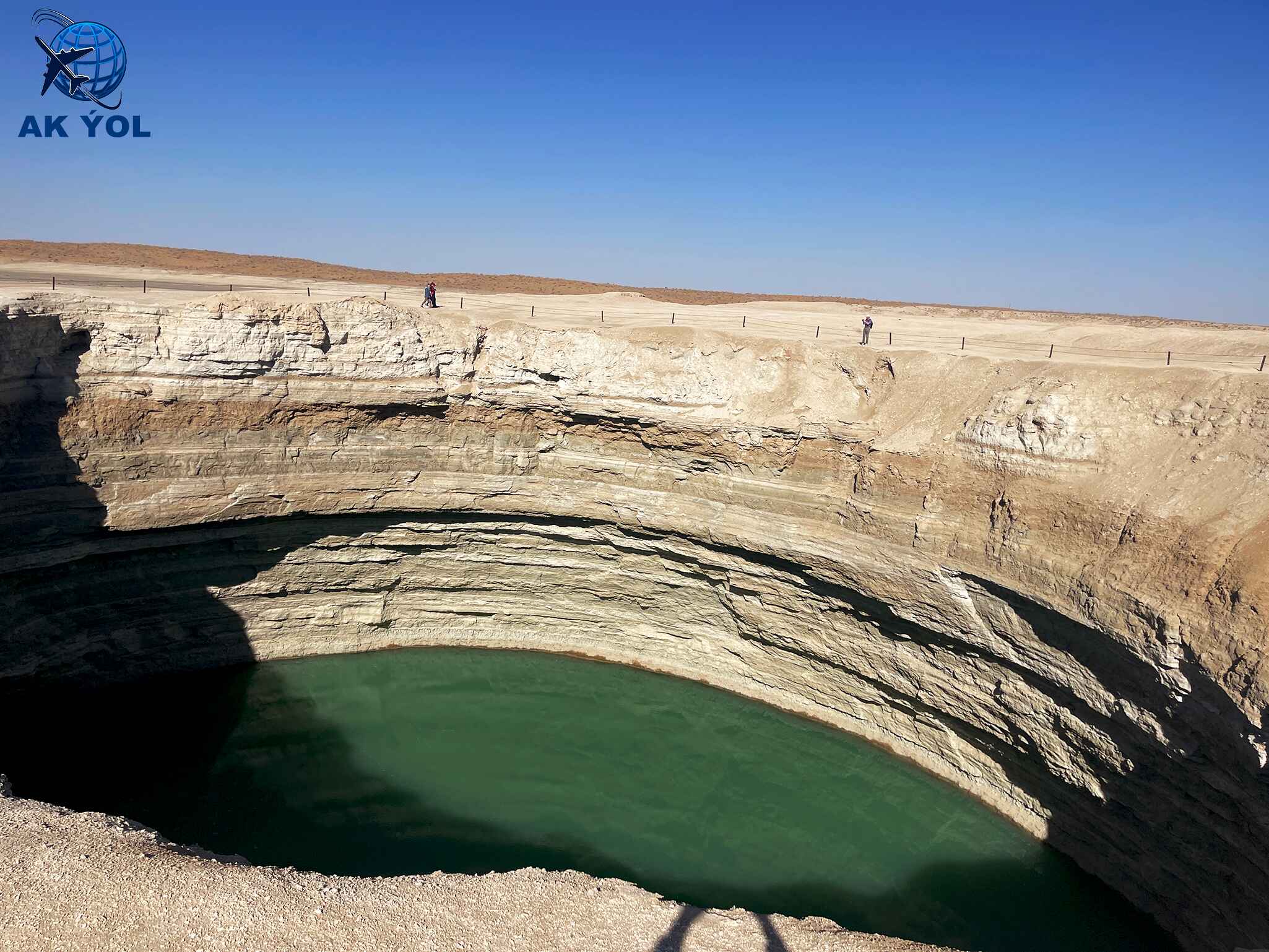
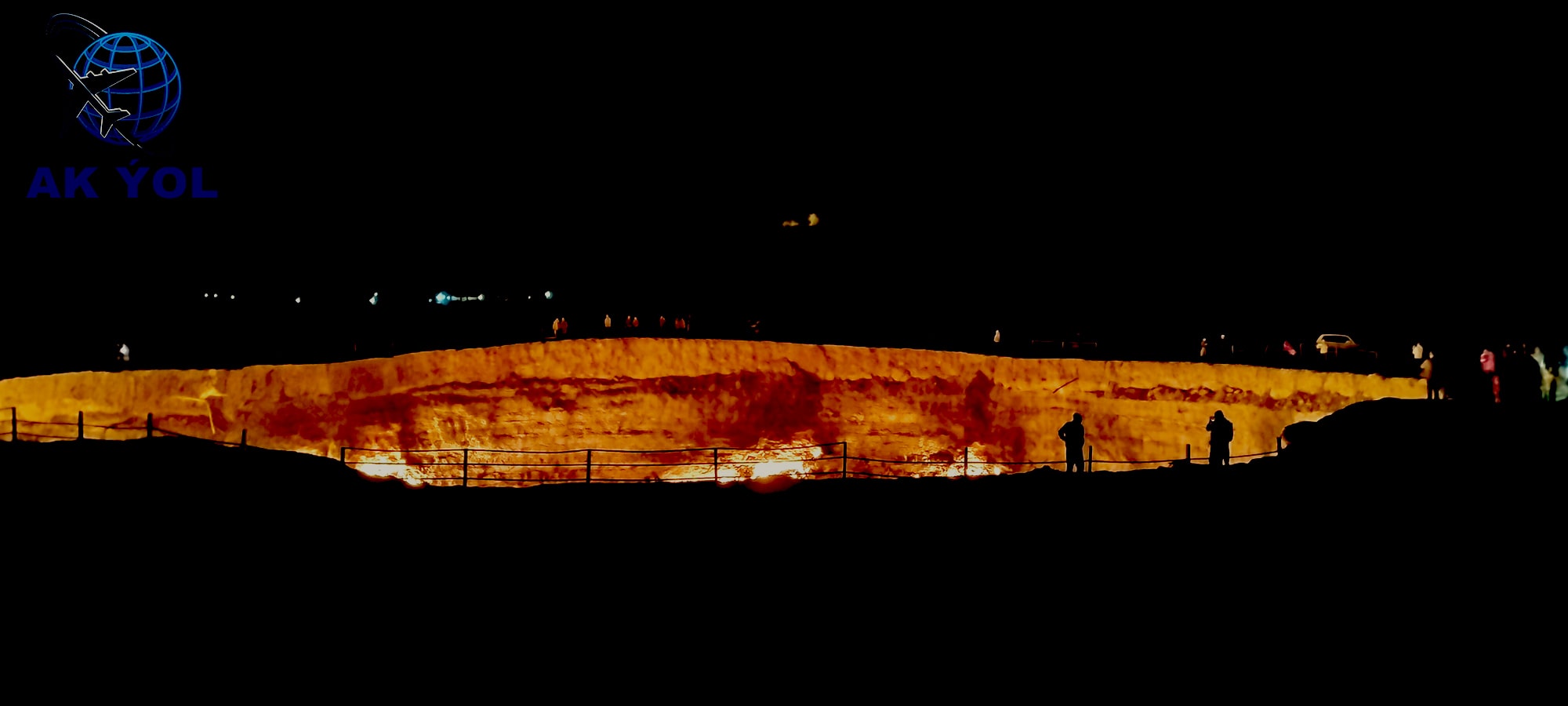
Darvaza, the center of a gas-rich area in the heart of the Karakum Desert, attracts travelers from all over the world with its unique burning crater, which offers especially spectacular views in the dark.
BBQ style dinner
Night at the yurt
-
BREAKFAST BBQ
We pack up our camp and head east, towards the very heart of the Karakum desert, the village of Damla. The road to Damla will take us over high sand dunes and across hard, dusty takyrs – plains of hard packed clay – revealing us the “naked” bed of the prehistoric Tethys sea, which once covered huge expanses of Eurasia, and of the fabled Uzboy River, one of the beds of the Amu-Darya (the Oxus) that flew across the desert into the Caspian Sea. Damla is one of the last abodes of the traditional pastoral life, sustained by cattle-breeding, mostly sheep, goats and camels, all the desert “kindly” yields to people.
Night at the tent or yurt
-
BREAKFAST BBQ
Damla is a Turkmen village located in the heart of the Karakum Desert. People here live in yurts or traditional small clay houses.
09:00 - drive to Ashgabat. On the way stop and take some photos Karakum desert.
Arrival in Ashgabat city and local restaurant Farewell dinner.
Transfer to the Ashgabat International Airport for flight to next destination.
We hope you enjoyed our service and hope you'll come back again.
Included
- Accommodation in mentioned hotels on DBL/TWIN sharing
- Breakfasts at the hotels
- Services of A/C comfortable transport with professional driver as per the program
- English,Spanish,Italian,German,French,Russian and Chinese speaking guides
- Daily 5 bottles of 0.5l water per person
- BBQ style dinner and breakfast at Darvaza crater
- BBQ style breakfast, lunch and dinner at Damla village
- BBQ style dinner and breakfast at Yangykala Canyon
- Train tickets: Ashgabat-Mary, Mary-Turkmenabat, Turkmenabat-Ashgabat, Ashgabat-Turkmenbashy-Ashgabat, Ashgabat-Dashoguz
- Entrance fees to mentioned sights per program (excluding photo and video charges at sights)
- Visa support to Turkmenistan, registration and travel pass
- Travel tax
- Handmade souvenir per person
Excluded
- Visa consular fees and processing expenses 80-100 USD per person, when obtained at land border (subject to change, nationality dependent)
- • Turkmenistan migration tax 14 USD per person
- • PCR nose test 33 USD
- • Photo and video charges at sights
- • An early check-in hotel
- Lunches and dinners
- • Beverages
- • International air tickets to / out of Ashgabat
- • Travel Insurance
- • Extras, not indicated in inclusions
Additional info
Note:
Check-in after 14:00, check-out before 12:00
An express PCR test for Covid-19 will be taken upon arrival. It costs 33 USD (subject to change)
Breakfast box in case of very early morning departures
Customer Support
We have a professional customer support team and always accompany you on every trip.