



Silk Road Tour Turkmenistan and Uzbekistan
About tour
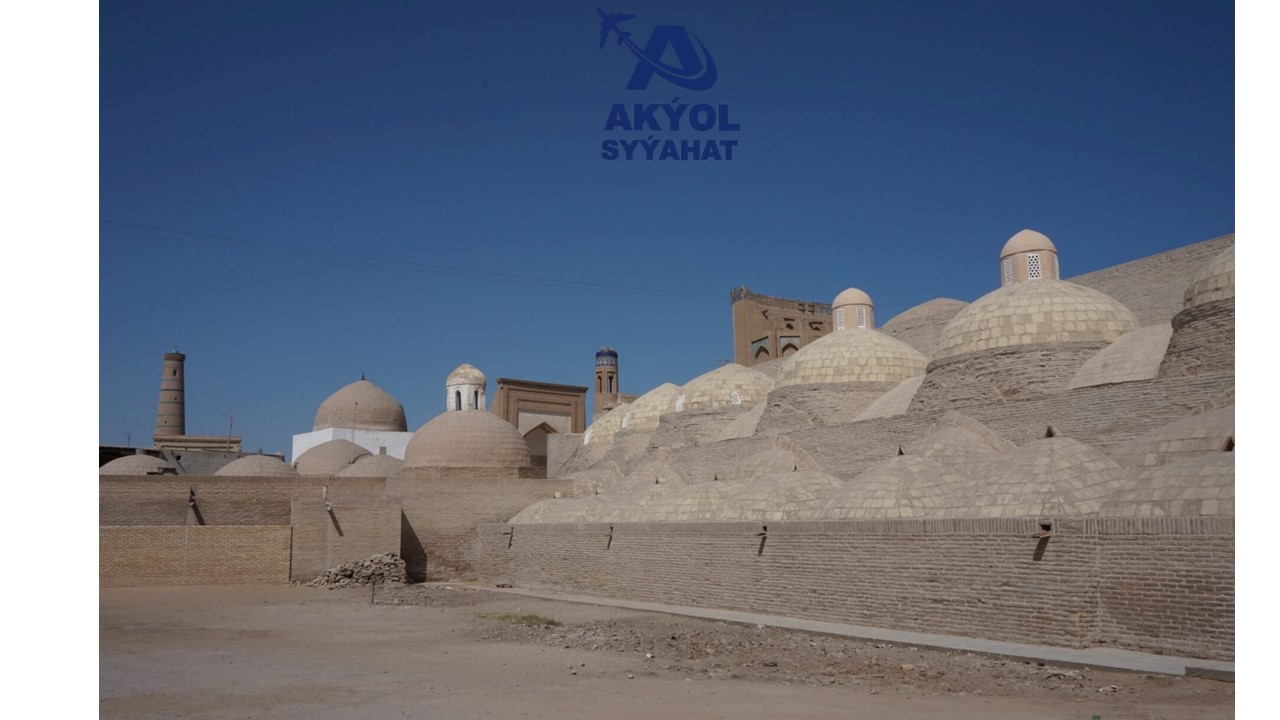
Ashgabat: The striking, modern capital known for its white marble buildings, golden statues, and the Guinness World Record for the highest concentration of white marble. Darvaza Gas Crater ("Door to Hell"): An awe-inspiring, continuously burning natural gas crater in the Karakum Desert, often involving an overnight yurt camp stay. Kunya-Urgench: A UNESCO site containing the impressive ruins of the former capital of the Khwarezmian Empire. Merv (near Mary): The ruins of one of the greatest cities of the Islamic world, another major UNESCO site and a key stop on the Silk Road. Yangykala (or Yangi Kala) translates from Turkmen as "Fiery Fortress," a perfect description for its appearance. Samarkand: Home to the magnificent Registan Square, Gur-e-Amir Mausoleum (Tamerlane's burial place), and the Bibi Khanum Mosque. Bukhara: A UNESCO World Heritage site known for its exceptionally well-preserved Old City, including the Poi Kalyan Complex, Lyab-i Hauz ensemble, and ancient trading domes. Khiva: A walled inner city (Ichan-Kala) that feels like an open-air museum, filled with minarets, mosques, and madrassahs. Tashkent: The modern capital, often serving as the arrival/departure point, featuring the Khast-Imam Complex and the famously ornate Soviet-era Metro.
Itinerary
-
Arrival to Ashgabat International airport
Tour guide will meet you and transfer to the hotel.
Upon arrival check in and overnight at the hotel. Rest time.
We will begin our tour in Ashgabat. Ashgabat is a relatively young city in 25.05.2013 city was included Gunnies Book of records as a white marbled city on the world.
10:00 – Ashgabat sightseeing:
The Turkmenbashi Ruhy Mosque eleven kilometers to the west of Ashgabat there stands one of the largest mosques in Central Asia and main mosque of Turkmenistan – The Turkmenbashi Ruhy Mosque. Like all other buildings of the period of independence it differs with its immensity and grandiosity.
Old and New Nisa 18 km from the city of Ashgabat in the outskirts of Bagir village there is a unique ancient monument, the ruins of ancient settlement Nisa. It used to be the capital of Parthia which had existed from the third century B.C. to the third century A.D. The Historical complex includes two archeologic monuments - Old and New Nisa.
Independence Park if you once find yourself in Ashgabat, the city of love, white marble and thousands of fountains, you must visit the main park in the Turkmen capital - National Independence Park. This Park is one of the city’s attractions, embodying the spirit of modern Turkmenistan.
Arch of Neutrality used to stand on the main square of the country, but in 2011, was moved to Ashgabat’s outskirts. Still worth a visit, this multi-level structure is crowned by a sculpture of the former Turkmenistan´s President, Saparmurat Niyazov. Previously, the sculpture used to rotate after the sun, making a daily full turnover.
Halk Hakydasy Memorial Complex located on a hill towering over the city, the Memorial Complex covers an area of 650 000 metres2. It includes the monument dedicated to World War II, the monuments to the heroes of World War II and the Battle of Gokdepe, and to the victims of the 1948 Ashgabat earthquake. The Complex has a museum and a building for sadaqa on Day of Remembrance. The majestic stairs with rest areas leads to the monuments. The hill, on which the complex is located, has been turned into a magnificent park (431 000 m2) with blue spruces, cypress trees, lawns, flower beds, fountains and gazebos. There are alleys with original lamps and benches in the park, where people spend a lot of time admiring the beauty of this place, the panorama of a modern city or the natural landscapes of the Kopetdag Mountains.
Ertugrul Gazi Mosque is one of the most beautiful Muslim mosques of Turkmenistan. Like any other buildings, erected in Ashgabat during the period of independence, the mosque strikes with its size and rich decoration.
Night at the hotel.
-
BREAKFAST
09:00 - drive to Mary Region (350 km, 3-4 h). On the way visit:
Seyitjemaleddin Mosque located in the city of Anau, 12 km east of Ashgabat along the Ashgabat-Mary highway. The Seyit-Jemallidin Mosque is a complex structure that once included a mosque, madrasah and the mausoleum of Sheikh Jemal ad-Din.On the Turkmen land the famous Seyit-Jemallidin mosque, widely known as “Seyit-Jemal ad-Din”, a well-known monument that preserves the unique architectural traditions and artistic styles of the Iron Age. The monument was built in the 15th century during the reign of Abul Qasim Babur, a Timurid descendant in Khorasan. This mosque amazed many Muslim architects of the East with its external beauty and architectural features.
Abiverd one of the most important cities of Northern Khorasan is a medieval settlement Abiverd. Hafiz-i-Abru said that Abiverd settlement consisted of dozens of villages and several cities. The city wall is a rectangular area of 42 hectares.There also were found ancient coins, ceramics products of IX-XII centuries, as well as a lot of metal handicrafts: various women's jewelries, buckles. According by them, we can say that there were shops of jewelers and tinkers. During the excavation’s archeologists found huge wells and reservoirs, indicating a highly-developed irrigation of Abiverd. The first investigation was taking place in 1928 under the lidership A.A. Semenov, who first made a plan of the city, citadel and remains of the city wall. In addition to Semenov’s scientific works, there are also archeological materials collected by the members of the expedition from different parts of Abiverd.
Mary Regional Library (also known as the Mary Library) is an important architectural and cultural landmark in the city of Mary, Turkmenistan. It is the largest regional library in the Mary region (Mary velayat). Here are some key facts about the library: Inauguration: The new, modern library building was officially inaugurated on October 20, 2011, replacing an older structure. Architecture: The building has a distinctive spherical shape and is supported by 62 columns. It is 42 meters high. Capacity and collection: The three-story structure is designed to hold up to three million books and can accommodate 600 readers at a time. A bookstore A museum on the history of Turkmen books, featuring rare copies and ancient manuscripts. Beneath the dome, shaped like the petals of a tulip, is an observatory equipped with a powerful telescope.
Main mosque in Mary, Turkmenistan, a truly impressive sight. Architecture: It is a magnificent example of modern Islamic architecture, with brilliant white marble and a striking golden dome, flanked by four tall minarets (63 meters). Capacity: The prayer hall can accommodate 2,500 people.
Pokrovskaya Church, also known as the Church of the Intercession of the Virgin Mary. Russian Orthodox Church. Construction: Built around 1900 by Russian forces after establishing a military and administrative headquarters in Mary in 1884. Architecture: It features a red brick facade in traditional Russian style, a practical choice in the desert region where timber was scarce. The design uses alternating red and white brick colors for details such as arches and moldings.
Night at the hotel.
-
BREAKFAST
09:00 – visit the historical sites of ancient Merv. Located from Mary city 30 km.
Soltan Sanjar Mausoleum most majestic architectural monument of Merv is Sultan Sanjar mausoleum called "Dar-al-Akhir" ("Otherworld"). His whole appearance it represents the highest achievements and flourishing Seljuk power. Sultan Sanjar Mausoleum is located in the center of the settlement Sultan Kala. Nearby are large monumental buildings - the palaces of Seljuk rulers and a mosque.
Great and Less Kiz fortress small fortresses with corrugated, if folded in the crease, napodobye accordion, walls. They put on the earthen ramps with mild slope. Small windows are hidden in the folds of the walls. At the top of the wall terminate toothed battlements, which are almost did not survive.
Gyaur Kala fortress In Turkic languages, "Gyaur" means "infidel", referring to those who do not practise Islam. The name of the fortress in ancient Merv, Gyaur-Kala - "Fortress of the Infidels" - was given by the Arabs who conquered it in the early 8th century. However, the fortress itself dates back much earlier, to the 4th-3rd centuries BC.
Erk-Kala fortress was the center of ancient Merv. The fortifications of Erk-Kala have sagged under earth drifts but nevertheless, have preserved their height and power. This distinguishes Erk-Kala from other fortresses. Now the height of the fortifications with steep slopes and precisely cut out towers reaches 25 - 29 m.
Yusuf Khamadany Mosque this complex was built on the burial site of Abu-Yakub Yusuf ibn Ayub born in the city of Hamadan (western Iran). Above his tomb the mausoleum, which has not survived, was erected. The destroyed structure was partially restored and reconstructed in the 19th century. The tomb of the dervish symbolizes a crypt from black marble decorated with a floral ornament and inscriptions. There is a chapel in the western corner of the mausoleum with central aivan. It is the basic part of the complex. Today Yusuf Khamadani mosque is an important Muslim temple, the place of worshipping.
Sultan Kala fortress in the 11th-12th centuries Merv became the capital of Great Seljuk state and reached the highest prosperity. By the order of Seljuk sultan Melik-shakh the city was surrounded by a fortification and moat.This fortress with the area of over 400 hectares is known as Sultan-Kala - the Fortress of Sultans. In the northeastern part of Sultan-Kala Shakhriar-ark citadel with palace complexes of sultans, administration buildings and a military barracks - was constructed.
Mohammed ibn-Zeid Mausoleum is an outstanding monument of Sultan-Kala. It is relatively small but arouses admiration by its original architectural solution. The interior of the mausoleum has a unique wall inscription in Arabian language. The letters skillfully carved from burnt bricks boldly stand out on the background of the vegetative pattern made of plaster. It’s says that the mausoleum erected above the tomb of Mohammed ibn - Zeid, the representative of Shiit branch of Islam, the descendant of caliph Ali in the fifth generation in 1112-1113. Afterwards, we'll enjoy an immersive cultural experience at Gadymy Turkmen Ojak, an ethnic guesthouse where we'll sample freshly baked Turkmen bread, watch traditional dishes being prepared, and witness embroidery, wool spinning, and carpet making. We will also attend a folk-dance performance organized especially for the group. After transfer to Mary Airport for the flight to Ashgabat. Upon arrival in Ashgabat and check-in hotel. Night at the hotel
History, Flora and Fauna of Mary Region in the Mary History Museum The Mary History Museum was established as the Mary Museum of History and Revolution in 1968. Its first exposition opened in 1974. When Turkmenistan gained independence, the Museum in 2008 moved into a new white-marbled building in the center of Mary.
Transfer to Mary Airport .
20:15 – Flight to Ashgabat,
20:55 –Upon arrival in Ashgabat, then transfer to the hotel.
Night at the hotel.
-
BREAKFAST
Transfer to Ashgabat airport
06:20 - Flight to Turkmenbashy
07:20 - Arrival in Turkmenbashy
Turkmenbashi (formerly called Krasnovodsk), 654 km from the capital of Turkmenistan. It is situated on the Caspian Sea and has some magnificent sandy beaches. In recent times, it has become a major transport center, with developed oil refining and construction industries. Turkmenbashi serves as the starting point for many excursions into the surrounding mountains and coastal resort towns. Here, on the shores of the Caspian Sea, the sun shines warmly throughout the year, with golden sands gently crunching underfoot and the waves of the warm sea lapping at the beach.
Free day at Caspian Sea.
Visit a bazaar where you can buy fresh, dried, or smoked seafood, such as sturgeon, caviar, sprats, or other fish from the Caspian Sea region.
Night at the hotel
-
BREAKFAST
09:00 - drive to Yangikala Canyons (170 km, 3 hours), one of Turkmenistan’s scenic highlights.
Yangiqala Canyons via Balkan Mountains - Impressive white, green and red limestone formations rise up from the desert sands. These cliffs are the remains of massive coastline and seabed of the pre-historical Parathetys Sea. This surreal landscape is impressive at any time of day, but sunset and sunrise offer particularly spectacular views. The area is reachable only by 4-wheel drive, passing through the Balkan Mountains and a vast highland area where camels, sheep and horse’s graze.
Gozli Ata Mausoleum (67km, 2hrs). Gozli Ata (“All-Seeing Father”) was a well-respected 14th century Sufi saint who was killed during a Mongol invasion. His grave, along with the adjacent grave of his wife, is considered one of the holiest sites in Turkmenistan today.
Return to Yangykala Canyon.
You can watch the sunset, this time Yangykala Kanyon is very beautiful.
Barbeque style dinner.
Night at the tent.
-
BREAKFAST BBQ
08:00 - you will visit:
Kemal-ata is a hill in the vicinity of the provincial town of Old Crimea. It contains the remains of some foundations and several tombstones with the names of sheikhs. Kemal-ata is popularly known among the people as the grave of Mamai. Defeated by Dmitry Donskoy in 1380, Mamai fled to Kaffa (Feodosia) where the Genoese promised him to save, but treacherously killed him. It should be noted, however, that the word "mamai" has become in the Old Crimea and its environs, to some extent, a household name: many other hills and mounds are called simply mamai.Ornament Kemal - Ata is stone educations, many of which are on canyon slopes.
Western Turkmenistan - Small and Big Balkhan. Big and Small Balkhan - ridges in the west of Turkmenistan, near the Caspian Sea, the mountains extended from the West on the East on 60 kilometers, width - 20 kilometers. The highest point - the mountain Arlan of 1880 meters above sea level. In a mountain landscape ridges, deserts, and mountain steppes dominate.
Parau Bibi this is the Mausoleum of Parau Bibi, which dates perhaps to the 11th century. It is now one of the most important centres of shrine pilgrimage in Turkmenistan. A legend surrounding the place, similar to the tales governing several other mountain shrines across Turkmenistan, is that Parau Bibi was a maiden of great virtue. When faced with the prospect of capture by an approaching enemy raiding party, Parau Bibi prayed that the mountainside should open up and take her, in order to preserve her honour. It did so, and the local people, so the story runs, built the mausoleum on that very spot.
Upon arrival Serdar town and check-in hotel
Night at the hotel.
-
BREAKFAST
09:00 - drive to Ashgabat (222 km). On the way visit:
Nohur (also known as Nokhur or Nokur) is a remote and picturesque village located in the Kopet Dag Mountains of southern Turkmenistan, near the border with Iran. Known for its stunning natural beauty and unique cultural traditions, Nohur offers a glimpse into a way of life that has remained largely untouched by modernity.The village is nestled in a deep valley surrounded by rugged mountains, providing breathtaking views of dramatic cliffs, lush greenery, and terraced landscapes. Traditional stone houses with flat roofs and wooden beams characterize the architecture of Nohur, blending harmoniously into the surrounding environment. Narrow streets wind through the village, giving it a timeless and serene atmosphere.
Underground lake Kov-Ata, located 107 km from Ashgabat.The Turkmen name Kov-Ata means Father of Caves. At first glance, this underground space looks like a magnificent auditorium: the total length of the cave is 230 m, the height reaches 20 m, and the width in some places reaches 57 m.The bottom of the cave is covered with lumps of dissolved limestone (stalagmites), and the warm, gushing water is clear and emerald in color. The water has a constant temperature of 33-37°C. (You should take a swim in the lake).
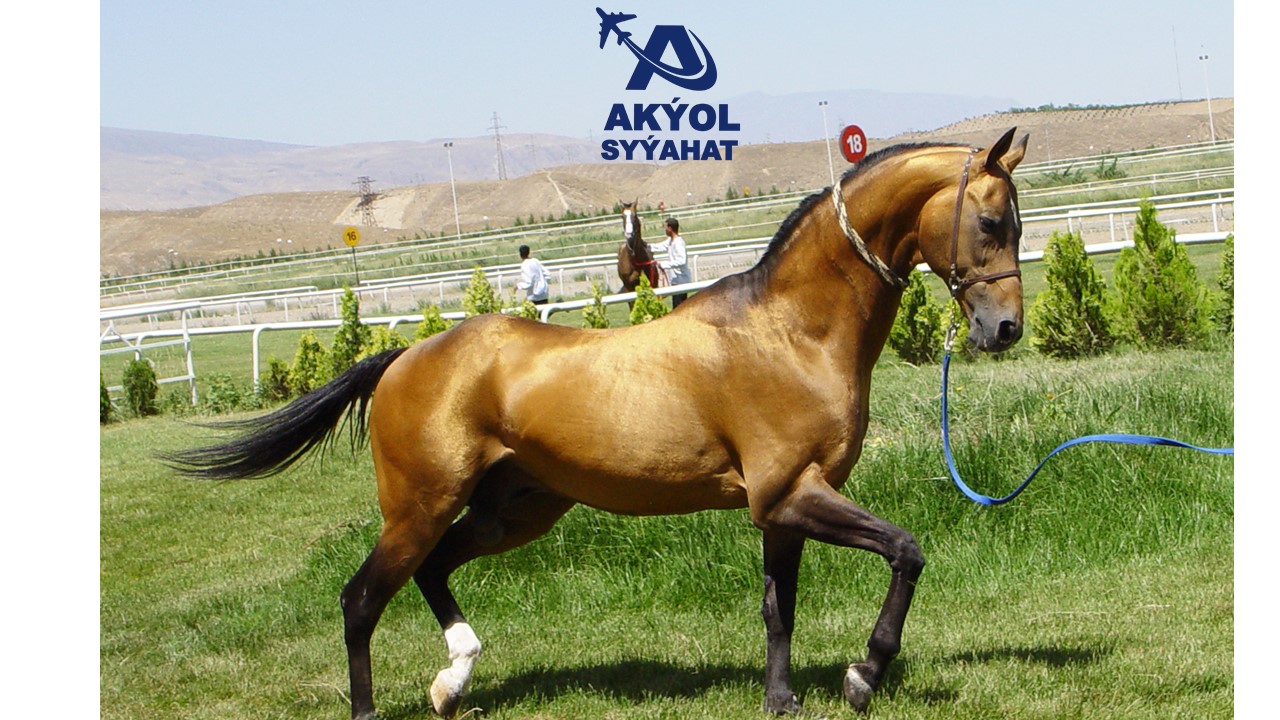
Akhalteke Horse Farm the horse farm is located in the countryside area, behind the GeokDepe town, 55km. Excursion at the farm to see the Akhal Teke horse and Turkmen dog Alabay. Akhal-Teke horse farm – home to the world-famous Turkmen horses. Learn about the breeding traditions and history of Akhal-Teke horses. Here, experts will tell you about Akhal-Teke horses. Next to the farm, you can take a horseback ride through the gardens.
Upon arrival in Ashgabat and check-in hotel.
Night at the hotel
-
BREAKFAST
09:00 - Ashgabat sightseeing:
Halk Hakydasy Memorial Complex located on a hill towering over the city, the Memorial Complex covers an area of 650 000 metres2. It includes the monument dedicated to World War II, the monuments to the heroes of World War II and the Battle of Gokdepe, and to the victims of the 1948 Ashgabat earthquake. The Complex has a museum and a building for sadaqa on Day of Remembrance. The majestic stairs with rest areas leads to the monuments. The hill, on which the complex is located, has been turned into a magnificent park (431 000 m2) with blue spruces, cypress trees, lawns, flower beds, fountains and gazebos. There are alleys with original lamps and benches in the park, where people spend a lot of time admiring the beauty of this place, the panorama of a modern city or the natural landscapes of the Kopetdag Mountains.
14:00 – Head towards the Darvaza Gas Crater (270 km, 4-5 hours drive).The Darvaza gas crater also known as the Door to Hell or Gates of Hell, officially the Shining of Karakum, is a burning natural gas field collapsed into a cavern near Darvaza, Turkmenistan. Hundreds of natural gas fires illuminate the floor and rim of the crater. The crater has been burning since 1971. You'll find the Darvaza mud crater perched almost conveniently close to the main highway - a mere 200-metre stroll away. The sheer cliffs of this crater proudly display layers of limestone deposits, with a diameter stretching 70 meters and a depth of around 20 metres. A further 24 km southward lies the Darvaza water crater. Much like its mud sibling, this crater is conveniently accessible from the main road – just 150 meters off the beaten track. It stretches 50 meters wide with steep walls leading to a water-filled basin 15 meters below ground level.
Dinner BBQ.
Night at the yurt.
-
BREAKFAST BBQ
08:00 - After breakfast departure to Khiva, Uzbekistan via to Dashoguz (369 km, 6-hour drive).
Lunch (on way) (1 h) Lunch includes courses from national cuisine as a standard option (see the "Special Notes"), however, guests can order other courses at an extra charge.
Crossing «Shavat» checkpoint border (30 min)
15:00 - Crossing «Shavat» checkpoint border, complete immigration and customs formalities and then proceed to the Khiva Our local tour guide will be waiting for you on the Uzbekistan side.
Direction to Khiva (1 h) 16:00 – Arrival at Khiva, accommodation to hotel Khiva is an ancient city, located within the Khorezm region. It has a well-preserved old town that dates back to the 10th century and is designated as a UNESCO World Heritage Site. The city is surrounded by walls and its old streets are home to unique mosques, madrassas, and mausoleums, including the Juma Mosque and the Kalta Minor minaret.
Night at the hotel.
-
BREAKFAST
09:00 - we continue our sightseeing tour in Khiva with visits :
Islam Khoja Madrasah and Minaret (without climbing) – one of the city’s most important landmarks, built by Islam Khoja, the prime minister of Khiva, featuring the tallest minaret in the city.
Pahlavan Mahmud Complex – a magnificent mausoleum dedicated to the renowned poet, philosopher, scholar, and national hero, admired for its exquisite decoration.
Mennonite Museum (Oq Masjid) – an interesting museum telling the story of the German Mennonite community that lived in Khiva in the 19th–20th centuries.
In the afternoon, transfer to the railway station and regular train to Bukhara.
Upon arrival and check-in hotel
Night at the hotel
-
BREAKFAST
09:00 - we begin our sightseeing tour of Bukhara:
The birthplace of Avicenna (Ibn Sina), one of the greatest figures in the history of world medicine.
Labi Khouz Complex (16th–17th centuries) – a charming architectural ensemble with a historic pond.
Nodir Devonbegi Khanaka and Madrasah, and Kukaldash Madrasah, a favorite gathering place for locals and visitors.
Ancient Covered Trading Domes (16th–17th centuries): Toqi Sarrofon (money changers), Toqi Telpakfurushon (hat makers), Abdullakhan Timi (the largest covered bazaar), and Toqi Zargaron (jewelers’ market).
Ulugbek Madrasah and Abdulaziz Khan Madrasah (outside view) – outstanding examples of refined Bukhara architecture.
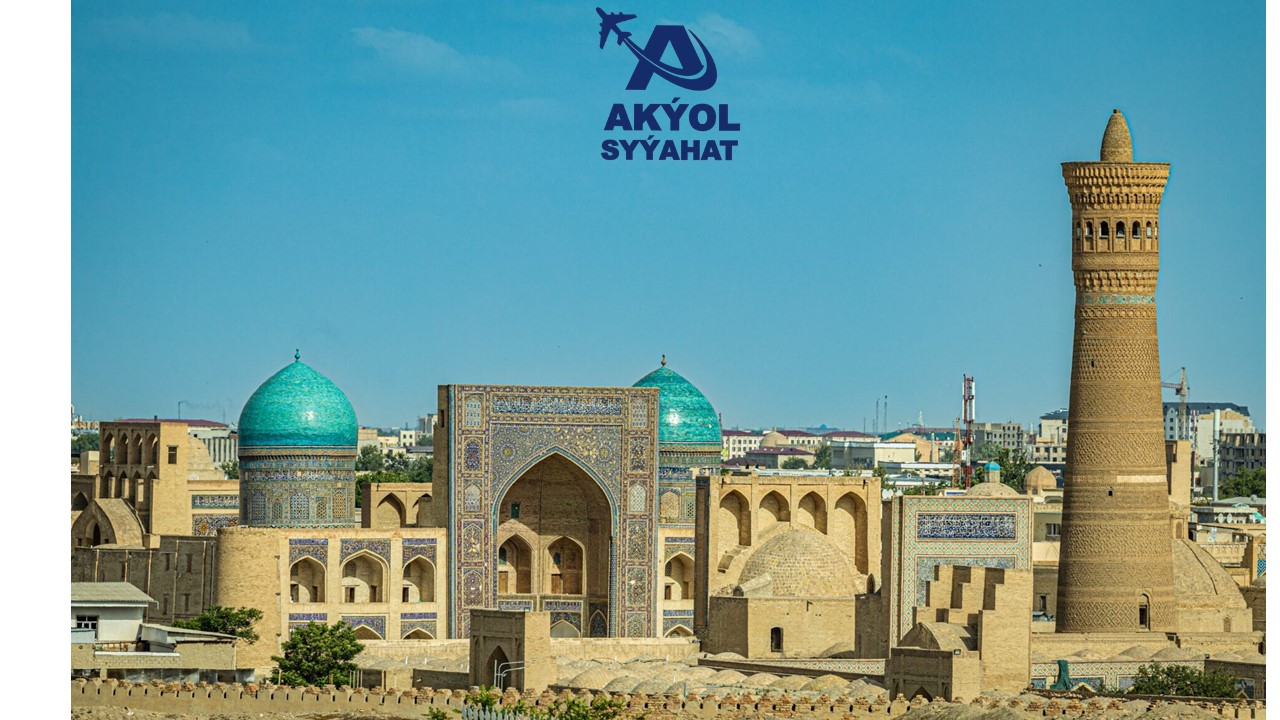
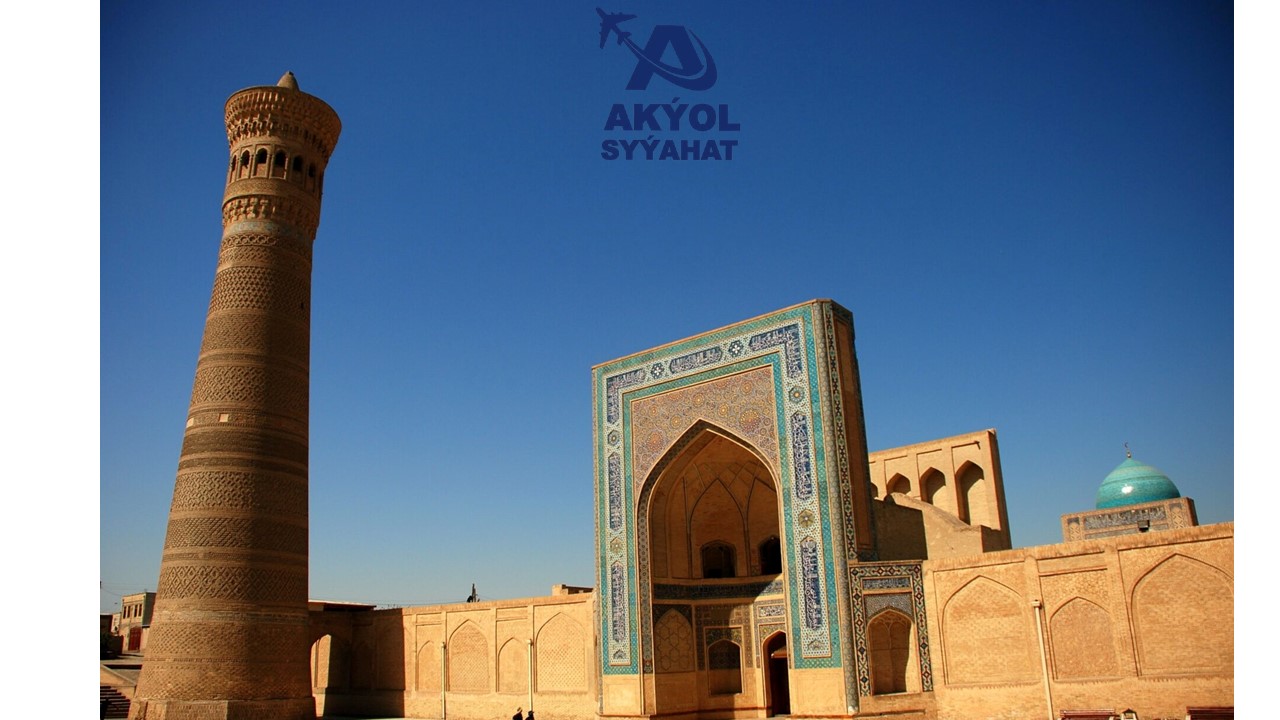
Poyi Kalon Complex (12th–16th centuries) – including the famous Kalon Minaret, Kalon Mosque, and Mir-i-Arab Madrasah.
Ismail Samani Mausoleum (9th–10th centuries) – a masterpiece of early Islamic architecture built entirely of baked brick.
Ark Fortress (5th–20th centuries) – the ancient citadel and former residence of Bukhara’s rulers.
Bolo Hauz Mosque (outside view) – admired for its elegant wooden columns and decorative style.
At the scheduled time, transfer to the railway station for the high-speed train to Samarkand.
Upon arrival, transfer to the hotel
Night at the hotel
-
BREAKFAST
08:30 - we begin our sightseeing tour of the ancient and ever-living city of Samarkand, with a history of nearly 3,000 years. We will visit:
Amir Temur (Tamerlane) Mausoleum (14th–15th centuries) – a masterpiece of Timurid architecture, admired for its grandeur and timeless beauty.
Registan Square (15th–17th centuries) – the heart of Samarkand, featuring the madrasahs of Ulugbek, Sher-Dor, and Tilla-Kori, once a major center of trade and learning on the Great Silk Road.
Bibi Khanum Mosque (14th–15th centuries) – built by order of Amir Temur and once the largest mosque in Central Asia.
Siyob Bazaar – the city’s most famous market, where you can experience local life and taste traditional sweets and dried fruits.
Shahi-Zinda Necropolis (9th–19th centuries) – one of the most sacred sites in Samarkand, a stunning ensemble of mausoleums dedicated to Qusam ibn Abbas and members of Amir Temur’s family, each with unique architectural styles.
In the evening, transfer to Samarkand railway station for the train to Tashkent.
Night at the hotel
-
BREAKFAST
09:00 - we'll begin our tour in the capital:
Khast-Imam Complex where the famous Quran of Caliph Usman is located. In the Khasti-Imam complex you will visit the Barak-Khan madrasa and Muyi Mubarak, and and The Mausoleum of and the mausoleum of Kaffal Shashi;
Bazaar Chorsu - it is an oriental market that is more than a hundred years old, always found in the main square of Eski-Juva;
Plaza Amir Temur - The history of the square in the center of Tashkent, named after Amir Timur, the commander and founder of a great medieval empire;
Independence Square - is located at the center of Tashkent. The main state events and parades are held here on national holidays.
We will end the tour with the Metro Station, the only one in Uzbekistan and the first in Central Asia.
Night at the hotel.
-
BREAKFAST
Transfer to Tashkent International Airport
End of our services.
We hope you liked our tour and you will come again
Included
- Accommodation in mentioned hotels on DBL/TWIN sharing
- Breakfasts at the hotels
- Services of A/C comfortable transport with professional driver as per the program
- English,Spanish,Italian,German,French,Russian and Chinese speaking guides
- Domestic air tickets: Mary-Ashgabat, Turkmenbashy-Ashgabat
- Tickets for high-speed train for Bukhara-Samarkand and Samarkand-Tashkent and in economic classes:
- Tickets for the normal train Khiva-Bukhara, in economic class (a private cabin for 4 passengers, with side beds).
- Daily 2 bottles of 0.5l water per person
- Half Board meals: 12 lunches in local/tourist restaurants (set menu).
- BBQ style dinner and breakfast at Darvaza crater
- Entrance fees to mentioned sights per program (excluding photo and video charges at sights)
- Visa support to Turkmenistan, registration and travel pass
- Travel tax
- Handmade souvenir per person
Excluded
- Turkmenistan visa consular fees and processing expenses 80+15 USD per person, when obtained at land border (subject to change, nationality dependent)
- Turkmenistan migration tax 14 USD per person
- PCR nose test 33 USD
- Visa costs if it is needed -Uzbekistan
- Single supplement
- Dinners not mentioned in the itinerary
- Tips for guide and drivers per person to pay at destination
- Photo and video charges at sights
- An early check-in hotel
- Beverages
- International air tickets to / out of Ashgabat
- Travel Insurance
- Extras, not indicated in inclusions
Additional info
Accommodation:
Ashgabat - Ak Altyn Hotel 3* or similar - 4 nights
Mary - Margush Hotel 3* or similar - 1 night
Turkmenbashy- Charlak Hotel 4* or similar- 1 night
Balkanabat - Nebitchi Hotel 3* - 1 night
Darvaza- Camp - 1 night
Tashkent - Florence 3* or similar - 2 nights
Khiva- New Minor Boutique or similar- 1 night
Bukhara- An Nur Boutique or similar - 1 night
Samarkand - Ideal 3* or similar - 1 night
Customer Support
We have a professional customer support team and always accompany you on every trip.