


Silk Road Cultural Discovery: Turkmenistan & Uzbekistan
About tour
A tour combining Turkmenistan and Uzbekistan offers a journey through the heart of the ancient Silk Road, contrasting the grand, tiled madrasas of Uzbekistan with the futuristic "White Marble City" of Ashgabat and the Karakum Desert.
Itinerary
-
Arrival in Ashgabat International Airport
Tour guide will meet you and transfer to the hotel.
We will begin our tour in Ashgabat. Ashgabat is a relatively young city in 25.05.2013 city was included Gunnies Book of records as a white marbled city on the world.
11:00 – Ashgabat sightseeing:
The State Museum of the State Cultural Center of Turkmenistan is the first and largest one of the 26 museums established following the independence of Turkmenistan. The official opening took place on 12 November 1998. It is located on Archabil Avenue in the picturesque Kopet Dagh foothills. Opposite the museum there is the main flag of Turkmenistan attached to one of the highest flagpole in the world.
Independence Park if you once find yourself in Ashgabat, the city of love, white marble and thousands of fountains, you must visit the main park in the Turkmen capital - National Independence Park. This Park is one of the city’s attractions, embodying the spirit of modern Turkmenistan.
Arch of Neutrality used to stand on the main square of the country, but in 2011, was moved to Ashgabat’s outskirts. Still worth a visit, this multi-level structure is crowned by a sculpture of the former Turkmenistan´s President, Saparmurat Niyazov. Previously, the sculpture used to rotate after the sun, making a daily full turnover.
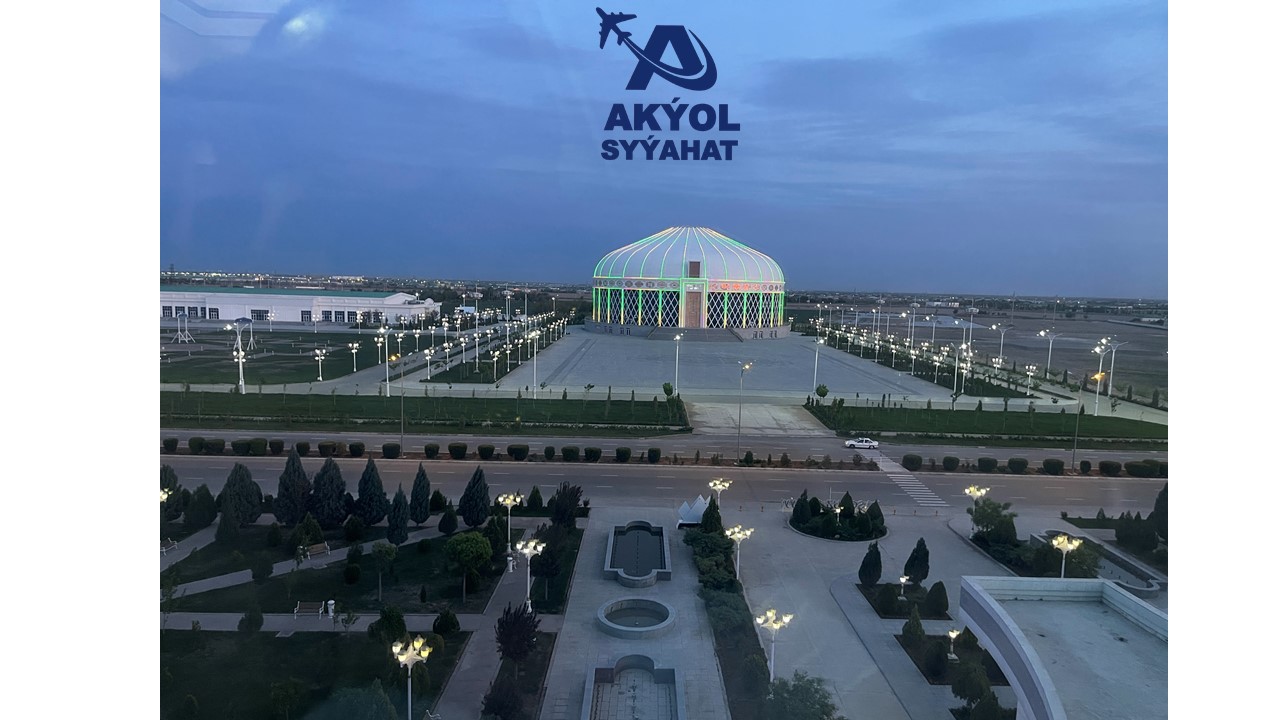
The Hotel “Bagt Koshgi” that from Turkmen language means “The temple of Happiness” is a part of a Wedding Palace with the same name located in 5 km from the centre of Ashgabat. This unique building of an unusual shape was opened in 2011 and besides the hotel includes six luxurious halls for marriage registrations, seven banquet halls, numerous shops and other different facilities necessary for wedding arrangement such as beauty salons, wedding dress boutiques, photo booths, and many others. “Bagt Koshgi “complex is an 11-storey building consisting of solid foundation on which a cube with octagonal sides stands, and this unusual figure can hold inside a huge ball with a diameter of 32 meters.
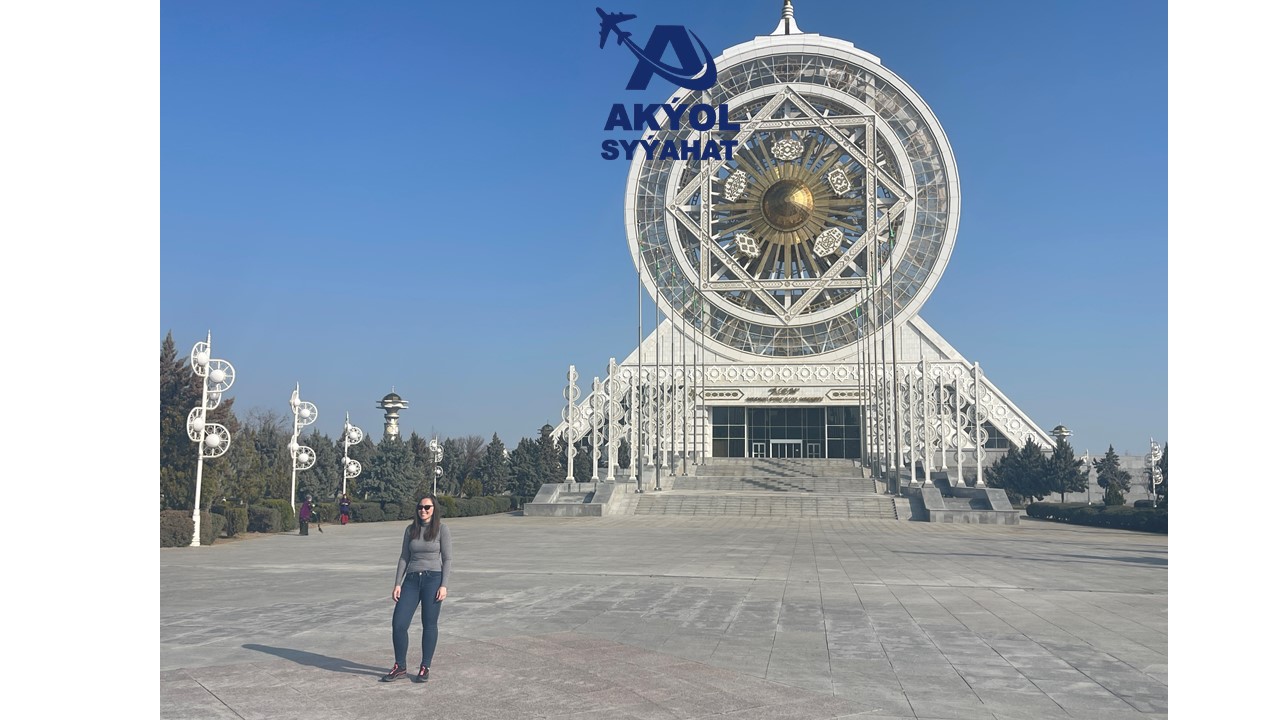
The Ferris Wheel in Ashgabat, known as the Giant Wheel, is an iconic landmark that complements the city’s modern skyline. From a height of about 40 metres, it offers a stunning panoramic view of Ashgabat and the surrounding landscape. Located in the heart of the city centre, the Ferris wheel is part of the large ‘Independence Park’, which features beautifully landscaped gardens, fountains and various recreational facilities. The giant wheel is particularly enchanting at night when it is lit up with multi-coloured lights, creating a vibrant atmosphere. It is an ideal place for families, couples and anyone who wants to admire the breathtaking views of Ashgabat, especially at sunset. This attraction symbolizes the rapid development of Turkmenistan‘s capital city and its desire for modernity, and provides a fun and enjoyable experience for all ages.
The Constitution Monument, in Ashgabat, stands as a symbol of the nation’s commitment to democracy and the rule of law. Unveiled in 2011, the monument celebrates the significance of the Constitution of Turkmenistan, which was adopted in 1992.Design and Features of the monument features a grand architectural design, characterized by its towering structure that represents the ideals of freedom and governance. The central element of the monument is a large, open book symbolizing the Constitution itself, with the text inscribed on its pages. Surrounding the monument are beautifully landscaped gardens, enhancing the monument’s prominence and serving as a peaceful gathering place for citizens and visitors.
Night at the hotel.
-
BREAKFAST
Transfer to Dashoguz Airport
06:20 - Flight to Turkmenbashy
07:20 - Arrival in Turkmenbashy
Drive to one of the most picturesque natural sites in all Turkmenistan, Yangykala Canyon (170km, 3hrs).
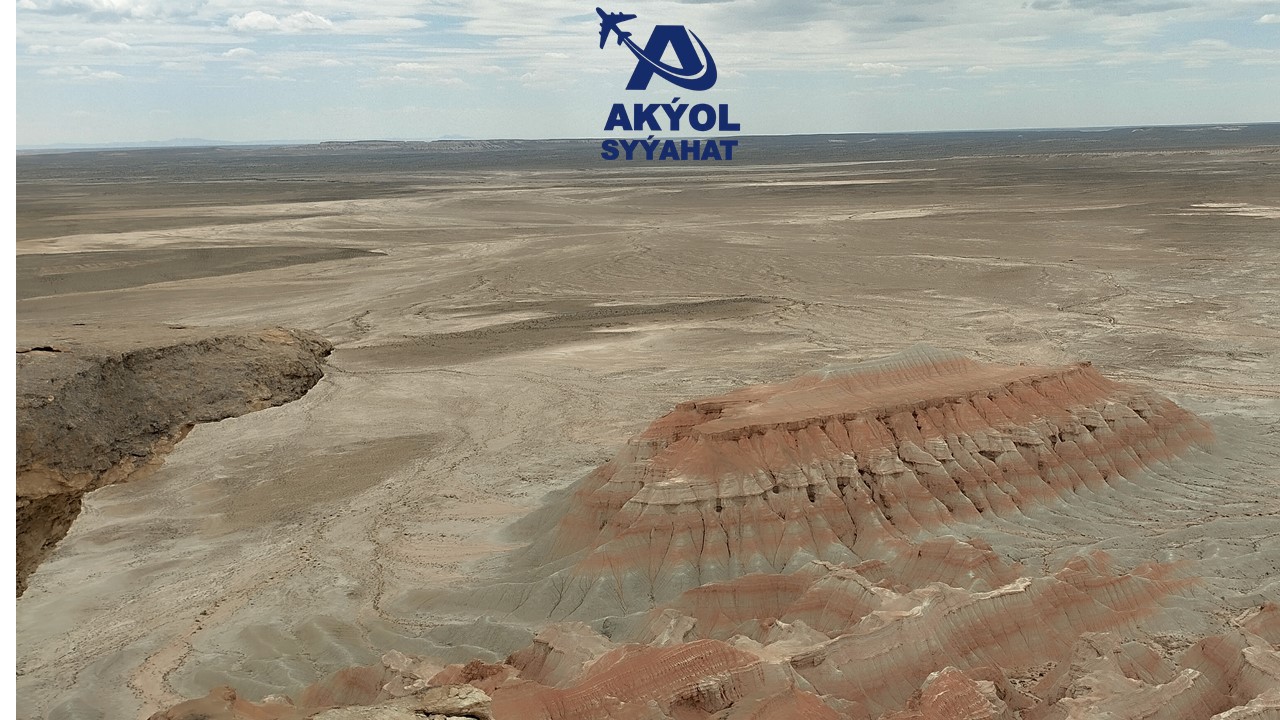
Yangiqala Canyons via Balkan Mountains - Impressive white, green and red limestone formations rise up from the desert sands. These cliffs are the remains of massive coastline and seabed of the pre-historical Parathetys Sea. This surreal landscape is impressive at any time of day, but sunset and sunrise offer particularly spectacular views. The area is reachable only by 4-wheel drive, passing through the Balkan Mountains and a vast highland area where camels, sheep and horse’s graze.
Enjoy a campfire dinner under the clear evening sky.
Overnight in tents in Yangykala Canyon.
-
BREAKFAST
09:00 - drive to Serdar (400 km) . On the way visit:
Gozli Ata Mausoleum (67km, 2hrs). Gozli Ata (“All-Seeing Father”) was a well-respected 14th century Sufi saint who was killed during a Mongol invasion. His grave, along with the adjacent grave of his wife, is considered one of the holiest sites in Turkmenistan today. The Kemal Ata Cemetery was begun near their burial site and now surrounds their graves.
Kemal-ata is a hill in the vicinity of the provincial town of Old Crimea. It contains the remains of some foundations and several tombstones with the names of sheikhs. Kemal-ata is popularly known among the people as the grave of Mamai. Defeated by Dmitry Donskoy in 1380, Mamai fled to Kaffa (Feodosia) where the Genoese promised him to save, but treacherously killed him. It should be noted, however, that the word "mamai" has become in the Old Crimea and its environs, to some extent, a household name: many other hills and mounds are called simply mamai.Ornament Kemal - Ata is stone educations, many of which are on canyon slopes.
Western Turkmenistan - Small and Big Balkhan. Big and Small Balkhan - ridges in the west of Turkmenistan, near the Caspian Sea, the mountains extended from the West on the East on 60 kilometers, width - 20 kilometers. The highest point - the mountain Arlan of 1880 meters above sea level. In a mountain landscape ridges, deserts, and mountain steppes dominate.
Parau Bibi this is the Mausoleum of Parau Bibi, which dates perhaps to the 11th century. It is now one of the most important centres of shrine pilgrimage in Turkmenistan. A legend surrounding the place, similar to the tales governing several other mountain shrines across Turkmenistan, is that Parau Bibi was a maiden of great virtue. When faced with the prospect of capture by an approaching enemy raiding party, Parau Bibi prayed that the mountainside should open up and take her, in order to preserve her honour. It did so, and the local people, so the story runs, built the mausoleum on that very spot.
Upon arrival Serdar town and check-in hotel
Night at the hotel.
-
BREAKFAST
09:00 - drive to Ashgabat (222 km). On the way visit:
Nohur (also known as Nokhur or Nokur) is a remote and picturesque village located in the Kopet Dag Mountains of southern Turkmenistan, near the border with Iran. Known for its stunning natural beauty and unique cultural traditions, Nohur offers a glimpse into a way of life that has remained largely untouched by modernity.The village is nestled in a deep valley surrounded by rugged mountains, providing breathtaking views of dramatic cliffs, lush greenery, and terraced landscapes. Traditional stone houses with flat roofs and wooden beams characterize the architecture of Nohur, blending harmoniously into the surrounding environment. Narrow streets wind through the village, giving it a timeless and serene atmosphere.
Underground lake Kov-Ata, located 107 km from Ashgabat.The Turkmen name Kov-Ata means Father of Caves. At first glance, this underground space looks like a magnificent auditorium: the total length of the cave is 230 m, the height reaches 20 m, and the width in some places reaches 57 m.The bottom of the cave is covered with lumps of dissolved limestone (stalagmites), and the warm, gushing water is clear and emerald in color. The water has a constant temperature of 33-37°C. (You should take a swim in the lake).
Akhalteke Horse Farm the horse farm is located in the countryside area, behind the GeokDepe town, 55km. Excursion at the farm to see the Akhal Teke horse and Turkmen dog Alabay. Akhal-Teke horse farm – home to the world-famous Turkmen horses. Learn about the breeding traditions and history of Akhal-Teke horses. Here, experts will tell you about Akhal-Teke horses. Next to the farm, you can take a horseback ride through the gardens.
Upon arrival in Ashgabat and check-in hotel.
Night at the hotel
-
BREAKFAST
08:00 - drive to Mary Region 350 km. On the way visit:
Altyn Asyr Bazaar, also known as the Tolkuchka Bazaar, is the largest and most vibrant market in Ashgabat, Turkmenistan. Situated on the outskirts of the city, the bazaar has become a hub for commerce and culture, offering visitors a glimpse into traditional Turkmen life.The Altyn Asyr Bazaar traces its roots back to the Soviet era when Tolkuchka (meaning “pushy” in Russian) was a small market where people gathered to trade goods. Over time, the market expanded in size and importance, and in 2011, a new, modernized version of the bazaar was opened under the name “Altyn Asyr.” The new structure replaced the old market, covering an area of more than 150 hectares, making it one of the largest outdoor markets in Central Asia.
Seyitjemaleddin Mosque. Located in the city of Anau, 12 km east of Ashgabat along the Ashgabat-Mary highway. The Seyit-Jemallidin Mosque is a complex structure that once included a mosque, madrasah and the mausoleum of Sheikh Jemal ad-Din.On the Turkmen land the famous Seyit-Jemallidin mosque, widely known as “Seyit-Jemal ad-Din”, a well-known monument that preserves the unique architectural traditions and artistic styles of the Iron Age. The monument was built in the 15th century during the reign of Abul Qasim Babur, a Timurid descendant in Khorasan. This mosque amazed many Muslim architects of the East with its external beauty and architectural features.
Abiverd one of the most important cities of Northern Khorasan is a medieval settlement Abiverd. Hafiz-i-Abru said that Abiverd settlement consisted of dozens of villages and several cities. The city wall is a rectangular area of 42 hectares.There also were found ancient coins, ceramics products of IX-XII centuries, as well as a lot of metal handicrafts: various women's jewelries, buckles. According by them, we can say that there were shops of jewelers and tinkers. During the excavations archeologists found huge wells and reservoirs, indicating a highly-developed irrigation of Abiverd. The first investigation was took place in 1928 under the lidership A.A. Semenov, who first made a plan of the city, citadel and remains of the city wall. In addition to Semenov’s scientific works, there are also archeological materials collected by the members of the expedition from different parts of Abiverd.
Monument to the poet Mollanepes. The monument located in the center of Mary city. He lived in the 19th century.
Maru-Shahu-Jahan bazaar. Located in the center of Mary city, near the Murgab River. Maru-Sahu-Jahan bazaar is a local shopping center, offering a glimpse into everyday Turkmen life with lively shops selling produce, textiles, and household goods. Visits are usually to experience the local culture, atmosphere, and to purchase souvenirs of national handicrafts.
Mary Regional Library opened in 2011.The Mary Regional Library of Turkmenistan is the main cultural, educational, and research center on the Mary River. It serves as a large book depository with over three million copies, housing nine reading rooms, a museum of Turkmen books, and an observatory. This library serves 600 readers at a time. It is known for its unique tulip-shaped dome, which houses an observatory with a powerful telescope.
The Pokrovskaya Church in Mary, Turkmenistan is a historic, red-brick Orthodox church built in 1900. Located in the center of the city, it is a model of early 20th-century Russian colonial architecture with ornate, detailed brickwork.
Night at the hotel.
-
BREAKFAST
After breakfast drive to Ancient Merv (located 30 km from Mary city).
Ancient Merv to explore ancient Merv, the "Pearl of the Orient," "Queen of the World," one of the most important capitals of the Muslim world along with Baghdad, Cairo, and Damascus. Ancient Margiana, known as Margouch at the time of Alexander the Great, the capital of the Seljuk Turks, is one of the oldest oasis cities on the Silk Road.
Ancient Merv was the most important Silk Road hub in the region, and particularly thriving as regional capital under Seljuk governor Sanjar. Merw is the collective name of five urban centers that existed under various different names in different periods from the VI c BC up to the XVIII c AD.Today, Merv occupies a territory of more than 1200 ha and forms the biggest archeological site in Central Asia. The importance of the site was recognized in 1999 by UNESCO, which awarded Merv World Heritage status.
The Seljuk capital, consisting of a shahristan (medieval citadel) and a rabat(outskirts of the medieval city), considerably exceeded Damascus and Jerusalem in size. Today the Seljuk citadel is called SultanKala. It has an oval shape and occupies about 630 hectares. Its layout is still visible in aerial pictures. Among all city sites of Merw, perhaps the most significant is the medieval Seljuk city.
Soltan Sanjar Mausoleum most majestic architectural monument of Merv is Sultan Sanjar mausoleum called "Dar-al-Akhir" ("Otherworld"). His whole appearance it represents the highest achievements and flourishing Seljuk power. Sultan Sanjar Mausoleum is located in the center of the settlement Sultan Kala. Nearby are large monumental buildings - the palaces of Seljuk rulers and a mosque.
Great and Less Kiz fortress small fortresses with corrugated, if folded in the crease, napodobye accordion, walls. They put on the earthen ramps with mild slope. Small windows are hidden in the folds of the walls. At the top of the wall terminate toothed battlements, which are almost did not survive.
Mausoleums of ashkhabs. Original set of graves from the time of the Arab invasioninto Central Asia in the early years after the death of Mohamed. The graves of two askhabs(companions/campaigners of the Prophet) are of Al KhakamGifari (died in 670) and Bureyda Al Aslami (died in 681).
Gyaur Kala fortress In Turkic languages, "Gyaur" means "infidel", referring to those who do not practise Islam. The name of the fortress in ancient Merv, Gyaur-Kala - "Fortress of the Infidels" - was given by the Arabs who conquered it in the early 8th century. However, the fortress itself dates back much earlier, to the 4th-3rd centuries BC.
Erk-Kala fortress was the center of ancient Merv. The fortifications of Erk-Kala have sagged under earth drifts but nevertheless, have preserved their height and power. This distinguishes Erk-Kala from other fortresses. Now the height of the fortifications with steep slopes and precisely cut out towers reaches 25 - 29 m.
Ice houses (approximately XV c., Timurid rule)are visible from the road between the medieval and ancient cities of Merv. An extraordinary conical clay construction, built directly on the ground to store tightly packed snow. The original height is hard to determine.
The mausoleum-complex of Hodja Yusuf Hamadani (Hamdani) includes a modern mosque and minaret, the grave and mausoleum of Hodja Yusuf Hamadani (died in 1140), a Timuridiwan(portal) and a prayer hall. It is located not far from the Seljuk citadel. This complex has been largely reconstructed and turned into an important pilgrimage site. Hodja Yusuf Hamadani was a famous Sufi scholar of the 12th century, and the first of a group of Central Asian Sufi teachers who founded the Naqshbandi order. He was born in 1048-49 in a small settlement called Bezendjird, close to the famous Iranian city of Hamadan, when Merw was under Seljuk rule.
Afterwards, drive to Farap/Alat border. Crossing border. You will meet guide and driver. Visits to the ancient sacred and noble city of Bukhara, the homeland of Avicena (Ibn Sina), Known as a world-famous doctor, we'll begin our tour by walking through the city, which is filled with historical monuments (9th-19th centuries): the Lyabi Hovuz Complex – a pond and Madrasah of Nodir Devonbegi, Kukaldash; the ancient oriental markets covered with domes.
Madrasa Ulugbek (16th century) – one of the oldest madrasas in Bukhara, Madrasa Abdulazizkhan (17th century) - luxuriously decorated;
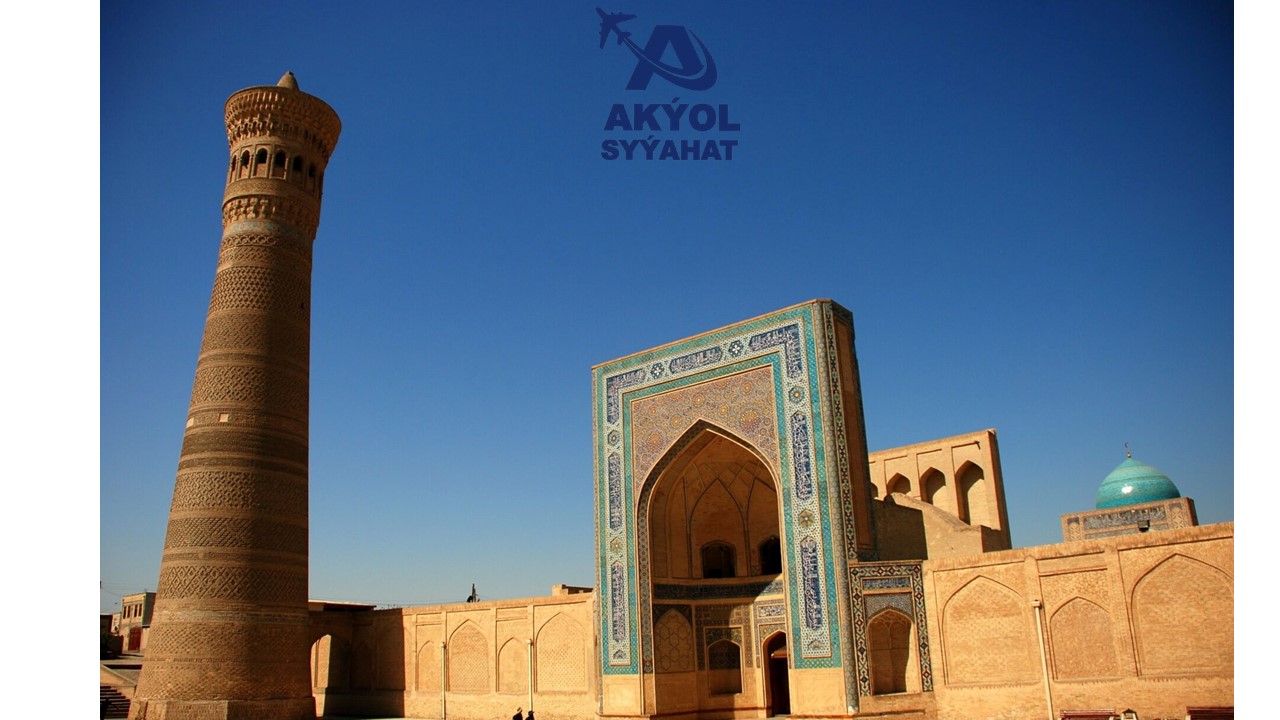
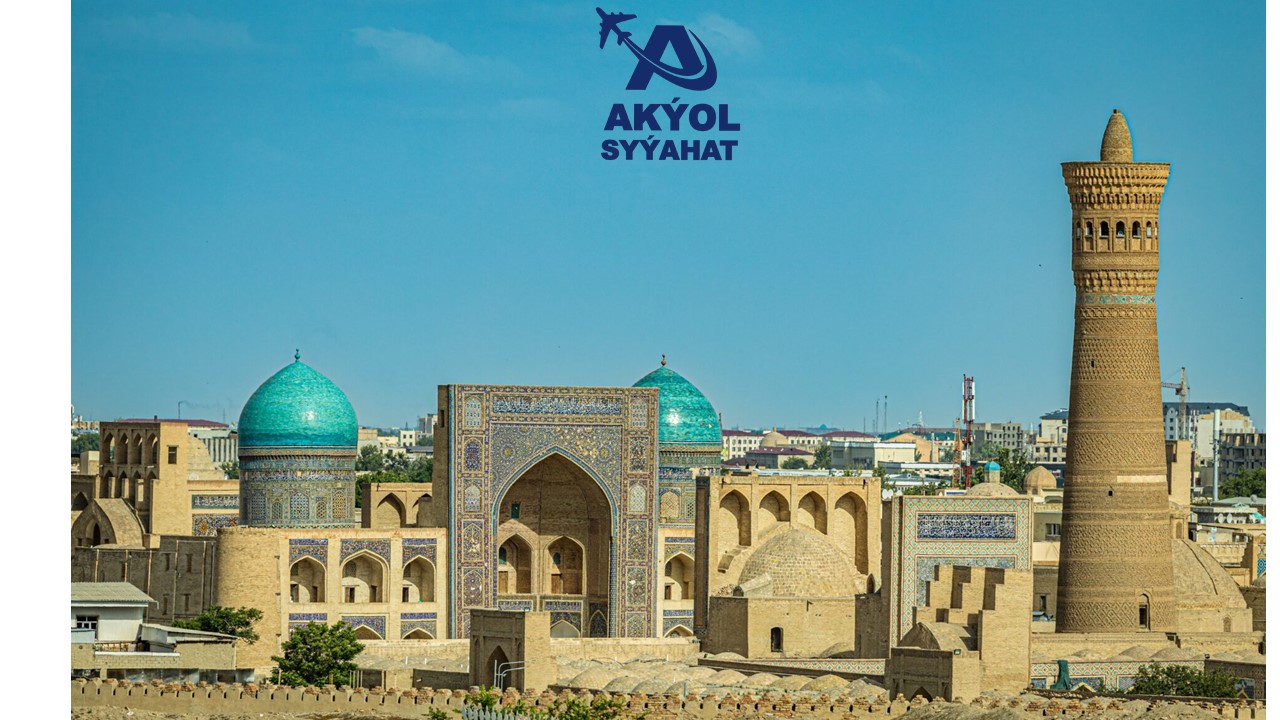
Commercial domes - Toki-Sarrafon (It was a currency exchange center in Central Asia), Telpak Furushon (He sold books, later caps), Tim Abdullakhan (sold carpets and fabrics), Toki-Zargaron (sold jewelry); Complejo Poi Kalon composed of: Minarete Kalon(12th century) - symbol of the city of Bukhara, intended to call Muslims to prayer five times a day, Kalon Mosque (15th century) - The layout of the Djuma Mosque (called Kalyan Mosque) is traditional: a rectangular courtyard with a tall, large maksura hall, Madrasa Miri-Arab (16th century) - one of the finest monuments of the Bukhara school of architecture. We will end the tour with the legendary Fortress of the Ark (4th century BC) - symbol of state power. It was the residence of the khans of Bukhara.
Night at the hotel.
-
BREAKFAST
The tour continues with visits to:
Madrasa Chor-Minor (1807) - "Four Minarets" - The decorative elements of the towers are believed to reflect the religious-philosophical understanding of the four world religions;
Mausoleum of Ismail Samani (9th century) - It was erected as a family crypt immediately after the death of Ismail Samani's father;
The Bolo-Khaus Mosque (1712) (from outside) - It is the only preserved monument in Reghistan Square. The complex consists of the cistern, the Friday Mosque, and the minaret. The oldest part of the complex is the pond (Khauz), which is called Bolo-Khauz.;
Sitorai Mohi-Khosa - The summer residence of the last Emir of Bukhara, a unique place combining Eastern and Russian architecture.
In the afternoon, we will transfer to the train station in Bukhara to take the high-speed train to Samarkand.
Arrival in Samarkand and transfer to the hotel.
Free time.
Night at the hotel.
-
BREAKFAST
Today we will visit:
Mausoleum of Amir Temur (Tamerlane) and of the Temurides - One of the most significant architectural complexes of the medieval East is the Gur-e Amir (Gur-Emir) building.It was located in the southwestern part of Samarkand at the beginning of the 15th century.;
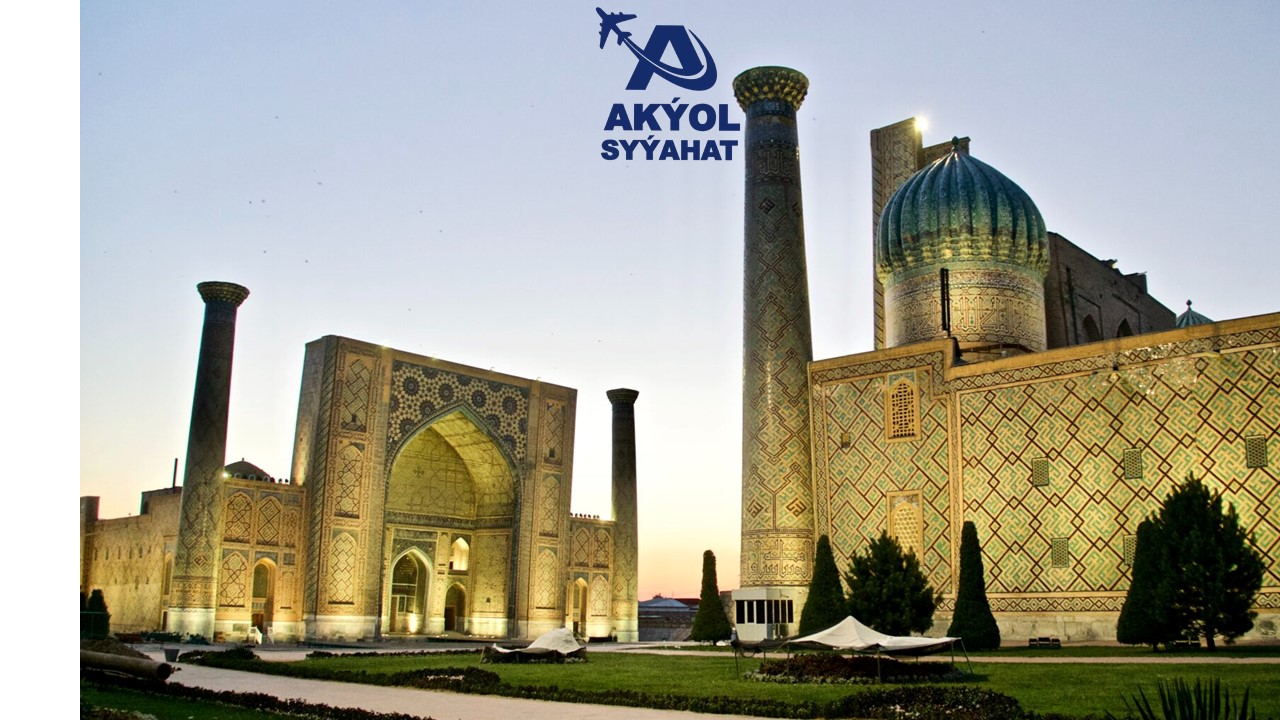
Registan Square in Samarkand, a symbol of Uzbekistan and the "eighth wonder of the world." It is a complex consisting of three madrasas: Ulugbek (15th century), Sher Dor y Tillya Kari (17th century).
Then we will visit the Bibi Khanim Mosque built in XIV-XV by order of Amir Temur and his favorite queen Bibi Khanim.
We will walk through the Siab oriental bazaar, traditional in Samarkand and the Shahi Zinda Necropolis where Tamerlan's relatives are buried.
Night at the hotel.
-
BREAKFAST
We begin today's excursion with a visit:
Famous Ulugbek Astronomical Observatory (15th century) and then the ruins of Afrasiab - ancient Samarkand, an archaeological complex that was founded in the 8th-6th century BC and the Afrasiab Historical Museum, the artisanal paper and carpet factories that were and are famous all over the world.
Today we will also make the visit a little different to the Orthodox Church 19th-century mansions built during the time of the Russian tsars.
Farewell dinner at a local restaurant.
Then you will return to the capital, Tashkent, by high-speed train.
Night at the hotel.
-
In the morning arrival in Tashkent, the capital of Uzbekistan, meeting with our colleague.
We'll begin our tour in the capital:
Khast-Imam Complex where the famous Quran of Caliph Usman is located. In the Khasti-Imam complex you will visit the Barak-Khan madrasa and Muyi Mubarak, and and The Mausoleum of and the mausoleum of Kaffal Shashi;
Bazaar Chorsu - it is an oriental market that is more than a hundred years old, always found in the main square of Eski-Juva;
Plaza Amir Temur - The history of the square in the center of Tashkent, named after Amir Timur, the commander and founder of a great medieval empire;
Independence Square - is located at the center of Tashkent. The main state events and parades are held here on national holidays.
We will end the tour with the Metro Station, the only one in Uzbekistan and the first in Central Asia.
Night at the hotel
-
Breakfast at the hotel. Transfer to airport. End of our services.
We hope you enjoyed our service and hope you'll come back again.
Included
- Accommodation in mentioned hotels on DBL/TWIN sharing
- Breakfasts at the hotels
- Services of A/C comfortable transport with professional driver as per the program
- English speaking local guide
- Domestic air tickets: Ashgabat-Turkmenbashy
- Tickets for high-speed train for Bukhara-Samarkand and Samarkand-Tashkent and in economic classes:
- Daily 2 bottles of 0.5l water per person
- Half Board meals: 10 lunches in local/tourist restaurants (set menu).
- BBQ style dinner and breakfast at Yangykala Canyon
- Entrance fees to mentioned sights per program (excluding photo and video charges at sights)
- Visa support to Turkmenistan, registration and travel pass
- Travel tax
- Handmade souvenir per person
Excluded
- Turkmenistan visa consular fees and processing expenses 80-100 USD per person, when obtained at land border (subject to change, nationality dependent)
- Turkmenistan migration tax 14 USD per person
- PCR nose test 33 USD
- Visa costs if it is needed -Uzbekistan
- Single supplement
- Dinners not mentioned in the itinerary
- Tips for guide and drivers per person to pay at destination
- Photo and video charges at sights
- An early check-in hotel
- Beverages
- International air tickets to / out
- Travel Insurance
- Extras, not indicated in inclusions
Customer Support
We have a professional customer support team and always accompany you on every trip.