


KYRGYZSTAN
KYRGYZSTAN
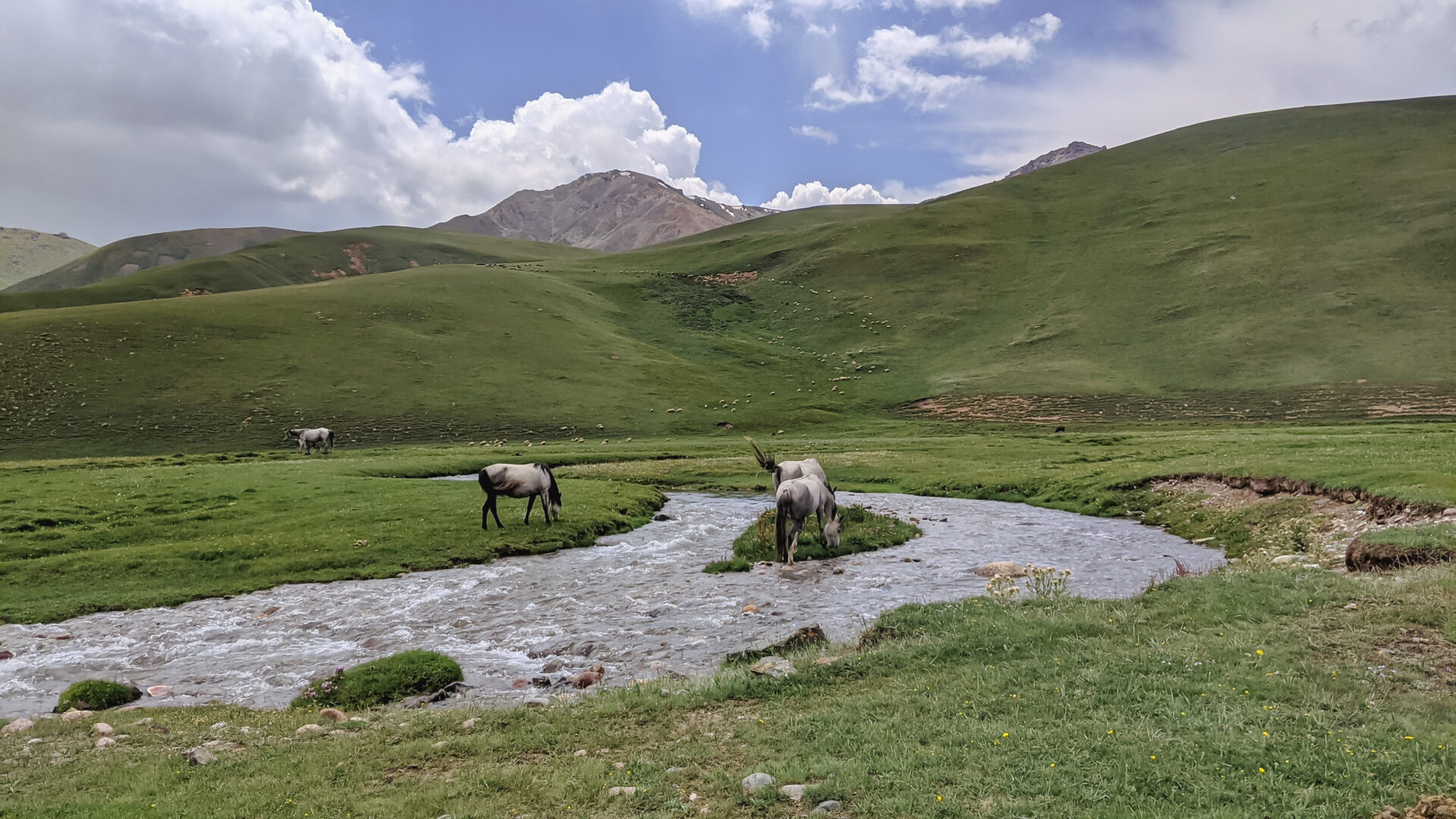
Kyrgyzstan is an exquisitely beautiful country with huge tourism potential: the rugged nomadic culture, endless mountains and lakes, warming hospitality and endless potential for adventure are a combination that draws increasing numbers of tourists each year to this off-the-map little nation. The Tien Shan and Pamir Mountain ranges wind their way through the territory of Kyrgyzstan and boast of dizzying heights: Pobeda Peak (7439 m), Lenin Peak (7134 m) and Khan Tengri Peak (6995 m), to name a few.
Kyrgyzstan is a great place for extreme sports: climbing, skiing, snowboarding, trekking and hiking. Yet travelers of all types will appreciate the gentle, rugged beauty found in Kyrgyzstan’s sparkling Issyk-Kul Lake, flowering meadows and rolling hills; the historical ruins to be found in the most remote and unexpected of places; and the warm, genuine hospitality of the Kyrgyzstan people.
BISHKEK
The capital of Kyrgyzstan, Bishkek, is situated in the Chui valley in the north of the country, between the Talas valley in the west and the eastern Issyk-Kul region. It was founded in 1878 and originally was called Pishpek, which is the name of the wooden paddle with which the Kyrgyz make their kymyz (kumiss - fermented mare's milk), the national drink. Later, during the Soviet Union period, it was named Frunze after the famous Russian General Mikhail Frunze. At the time of Independence in 1991, it was renamed Bishkek.
CHOLPON ATA
Cholpon Ata is the largest town (village) on the Northern shore of Lake Issyk Kul, about half way along, some 250 kilometers from Bishkek. Summer has always seen large swarms of travelers descend upon the north shore for a stay in one of the nearby sanatoria or resorts (Cholpon Ata boasts one of the two Presidential residences on the lake), and Soviet athletes used to come here to train at altitude. Although there are still large numbers of summer visitors, the region has lost some of it's appeal, as it has failed to keep pace with the competion. Most holiday visitors these days are wealthy residents of Almaty, Kazakhstan from across the border.
KARAKOL
Karakol is a charming town in eastern Kyrgyzstan, nestled at the foot of the majestic Tien Shan mountains. Here, you can take in breathtaking natural scenery, discover the rich culture of the Kyrgyz people, and explore centuries of history preserved in unique architectural monuments. Karakol is perfect for active travelers - ski slopes, hot springs, and the famous Lake Issyk-Kul are just a short drive from the city. In this guide, we’ll explore the main sights to see in Karakol and the local dishes you absolutely must try.
NARYN
Naryn is a town with a long, thin shape which straddles the fast flowing Naryn River and is set between high, steep cliffs. It still houses an army base and headquarters for the customs post at Torugart - and so camping on the hills overlooking the town is forbidden. Naryn is known mainly as a stopping point for travellers on the way to/from Kashgar, and unfortunately many guidebooks published in the West are not very complimentary about the town. The region offers many possibilities for trekking and if you are not in a hurry to pass through on your way to China, Naryn could serve as a center to explore this unspoiled and largely unknown region of the Central Tian Shan.
OSH
Osh is the second largest city in Kyrgyzstan, and is reputedly 3,000 years old. Archaeologists have found artifacts dating back to the fifth century B.C. One claim that is often heard is that Osh is "Older than Rome". There are several legends about the origin of the city - including claims to having been founded by Solomon or Alexander the Great.
Even if such a grand personage did not establish Osh, it's position at a crossroads along the ancient trading routes that became known as the Great Silk Road almost guaranteed that it would become a major settlement. In the period betweem the 10th and the 12th centuries it was the third largest city in the Ferghana Valley, and in 1762 it joined the Khanate of Kokand and became one of the six trading centers of the Khanate. Assimilated into Tsarist Russia in the 19th century, the city expanded onto the left bank of the river and European style houses started to appear.
TALAS
Talas is a little-known town in a valley of the same name. It is cut off from the rest of Kyrgyzstan by mountain ranges, and the "easiest" route is via Kazakhstan - involving the need for a transit visa. It is, however, possible to reach the valley by following the Tuu Ashuu pass and then turning north off the main Bishkek-Osh road after skirting the Suusamir Plain.This is known as the Land of Manas, reputedly the birthplace of the legendary hero, and is home to his mausoleum a few kilometers outside the city itself. On the grounds of the mausoleum is a museum dedicated to the story of the epic, which is overshadowed by a mound used as a lookout post by sentinels whose duty it was to protect the valley. Archaeologists have made some interesting discoveries here, and it appears that the mound may well be man-made - which, if true, is no small feat.
TASH-RABAT
Tash-Rabat was constructed in the 15th century, on the ancient trade route from Central Asia to China, and was a resting place for merchants, ambassadors, travelers and other wanderers. It is the largest structure built of stone from Central Asian architecture of that epoch. It is notable not only for it's size and building materials, but also for its special layout, based on perfect symmetry. Lost among the primeval wilderness, far from inhabited locations, the caravanserai looks unbleached, monumental and unassailable.
About 520km from Bishkek, 125km (1.5 hours) from Naryn, 17km from the end of the paved road (just past the emergency airstrip) 90km (1.5 hours) short of the Chinese border at Torugart, and at an altitude of approximately 3,500m above sea level sits the ancient caravanserai of Tash Rabat. According to one author, this is probably the best preserved Silk Road site you will find and "no other retains as much of it's original atmosphere".
.jpg)